In crypto, trust rarely comes from a single promise.
It emerges from a pattern.
Users don’t wake up thinking, “Is this protocol audited?” They ask something more practical and human: “Does this feel safe?” And that feeling is shaped by signals — small, repeated cues that add up to confidence or doubt.
This is the new trust stack in crypto. It’s not only about security architecture or audits (important as those are). It’s about how products communicate, behave, and respond — especially under pressure.
1. Trust Is a Stack, Not a Switch
Trust doesn’t turn on with one badge or announcement. It accumulates through layers:
- what users see first (design),
- what they can verify (transparency),
- what others say (social proof),
- how the product behaves over time (consistency),
- and whether real people show up when things go wrong (support).
Miss one layer, and the stack weakens.
Get them right together, and users feel safe—even in fast, irreversible environments.
Key idea: In crypto, perceived safety often determines adoption before technical safety is understood.
2. Design as the First Trust Signal
Design isn’t decoration; it’s communication.
Clean layouts, clear hierarchy, readable numbers, and deliberate spacing tell users:
- this product is intentional,
- flows are thought through,
- mistakes are less likely.
Conversely, cluttered screens, inconsistent icons, or hidden actions trigger hesitation — especially when money is involved.
Design answers the subconscious question: “Will this product help me avoid mistakes?”
3. Transparency Beats Reassurance
Saying “we’re safe” doesn’t build trust. Showing how things work does.
Users look for:
- visible fee logic,
- clear transaction breakdowns,
- understandable statuses (pending, confirmed, failed),
- accessible docs and FAQs,
- predictable outcomes.
Transparency reduces cognitive load. When users understand what’s happening, anxiety drops—and trust rises.
4. Product Behavior Under Stress
Trust is tested when things aren’t perfect.
How a product behaves during:
- high volatility,
- network congestion,
- partial outages,
- delayed confirmations,
matters more than how it performs on a calm day.
Users notice:
- Does the UI freeze or explain?
- Are actions blocked with reasons?
- Are updates communicated quickly?
- Is responsibility acknowledged?
Consistency under stress is one of the strongest trust signals a product can send.
5. Social Proof: Trust Is Shared
In crypto, people trust people more than platforms.
Signals include:
- recommendations from peers,
- mentions in credible communities,
- organic discussions (not paid hype),
- repeated use by people they respect.
This doesn’t mean influencer marketing — it means earned presence. Products that quietly work tend to spread through word of mouth because users feel confident sharing them.
6. Support Is the Human Layer of Trust
Automation is powerful — but trust deepens when humans are reachable.
Fast, human support signals:
- accountability,
- confidence in the product,
- respect for users’ time.
Even a simple response like “We’re looking into this and will update you shortly” can prevent panic and build long-term loyalty.
Silence, on the other hand, erodes trust instantly.
7. The Trust Stack at a Glance
| Trust Layer | What Users Look For | What It Signals |
|---|---|---|
| Design | Clarity, consistency, simplicity | Fewer mistakes, thoughtful UX |
| Transparency | Visible fees, clear flows | Nothing to hide |
| Behavior | Predictable actions, calm handling | Reliability under pressure |
| Social Proof | Organic mentions, referrals | Collective confidence |
| Support | Fast, human responses | Accountability and care |
Insight: No single layer is decisive — but together, they shape user confidence.
8. How INit Approaches Trust Differently
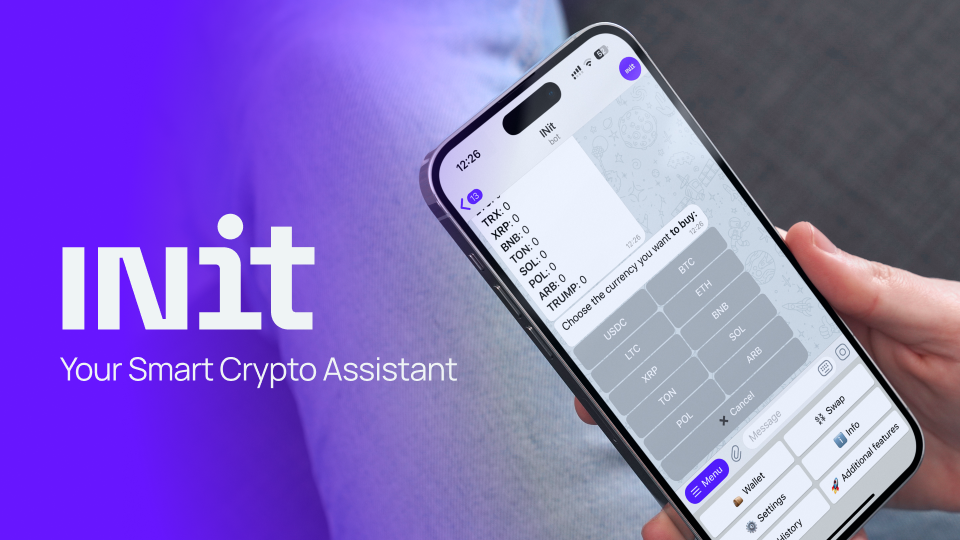
This layered approach is central to how INit is built.
Instead of relying on slogans, INit focuses on observable trust signals:
- Transparent communication: users can clearly see how transactions work, what fees apply, and what to expect before confirming actions.
- Predictable product behavior: flows are designed to explain what’s happening — especially when something takes longer than usual.
- Live, responsive support: real people answer questions quickly, helping users resolve issues without being redirected endlessly.
- Consistency across touchpoints: the bot, documentation, and website communicate the same logic and expectations.
The goal isn’t to claim trust—it’s to earn it through behavior, every day.
9. Why This Matters More Than Ever
As crypto moves into everyday use — payments, business operations, recurring workflows — users won’t tolerate uncertainty.
They won’t:
- double-check every transaction,
- read audits before each action,
- or accept silence when something feels off.
They’ll choose products that feel safe because they’ve proven themselves repeatedly.
Final Thought
Security protects funds. Trust protects users.
In modern crypto, the winners won’t be the loudest or the most complex. They’ll be the ones that quietly get the trust stack right—layer by layer—until users stop worrying and start using.
That’s the new standard.