For more than a decade, Telegram was seen simply as a messaging app — a place for conversations, communities, and broadcast channels.But as we enter the second wave of Web3 adoption, Telegram has quietly become something much bigger: a financial layer powered by bots, micro-transactions, and user-driven economic flows. Telegram today is no longer just […]
Keep ReadingCategory: Web3
The payment industry often frames innovation as a race. Cards versus cash.Fintechs versus banks.Crypto versus traditional finance.Stablecoins versus instant payments. But this framing is often too simple. Instant bank payments and stablecoin payments are growing at the same time because they solve different problems. One is strongest inside existing financial systems. The other becomes more […]
Crypto payments are often described through their strongest advantages: speed, finality, lower dependence on intermediaries, and continuous settlement. A payment can move directly from one party to another. It can settle outside banking hours. It can cross borders without passing through the same old chain of payment processors and correspondent banks. That is powerful. But […]
Crypto products have become dramatically faster over the past few years. Transactions settle in seconds.Swaps happen instantly.Interfaces are cleaner than ever.Automation handles more and more processes in the background. But despite all this progress, one problem remains surprisingly human: sometimes users simply need help. A transaction gets delayed.A withdrawal stays “processing.”A payment arrives on-chain, but […]
For years, one small but persistent friction defined the crypto experience: switch network. Ethereum to BNB Chain.Polygon to Arbitrum.Mainnet to testnet. For experienced users, this became second nature. For everyone else, it remained confusing, error-prone, and unnecessary. But this friction is starting to disappear. As crypto matures, the industry is moving toward a new paradigm […]
For years, Telegram bots were seen as lightweight tools. They were fast, simple, and convenient — but rarely considered serious financial infrastructure. They helped users swap tokens, check prices, or automate small actions. Useful, but not foundational. That perception is changing. As crypto matures and usage shifts from speculation to real operations, Telegram bots are […]
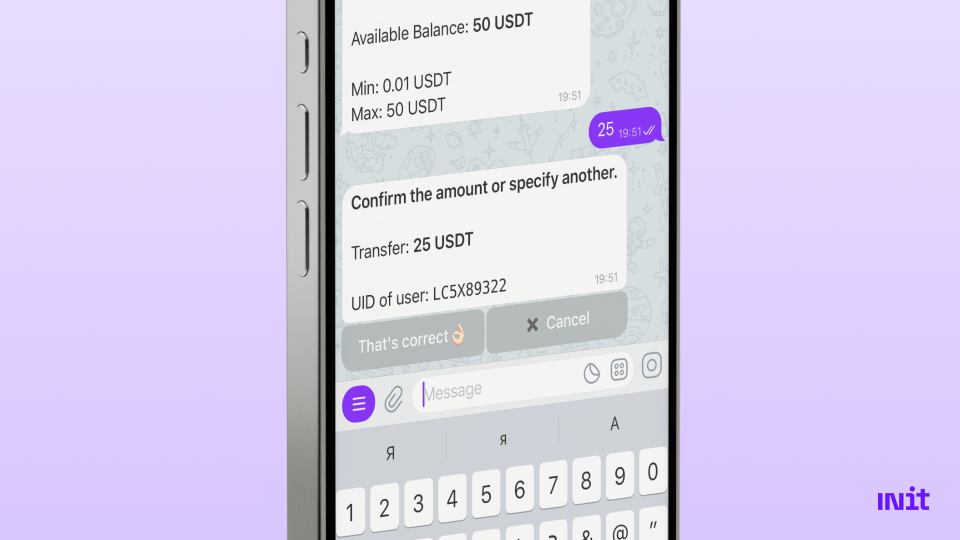
In crypto, a single action can carry permanent consequences. You send funds to the wrong address — they are gone.You approve a transaction with the wrong amount — it executes instantly.You misread a fee — you pay it anyway. There are no undo buttons. And yet, many products still treat confirmation as a formality — […]
Crypto products were originally built for a narrow audience — people comfortable with volatility, technical complexity, and financial experimentation. Early adopters were developers, traders, and enthusiasts who understood the risks and were willing to navigate complicated interfaces in exchange for control. But the industry has changed. Today, crypto is used by a far broader range […]
For years, crypto products competed on speed, liquidity, and the number of features they offered. But as the industry matures and user expectations evolve, another factor is quietly becoming a decisive advantage: fee transparency. In a market where many platforms advertise “low fees” or even “zero fees,” the true cost of a transaction is often […]
For over a decade, crypto products were built for a specific type of user. Someone who understood private keys.Someone comfortable with gas fees.Someone willing to read whitepapers.Someone who didn’t mind friction. Crypto was “for pros.”But that era is ending. As adoption grows and use cases expand beyond speculation, crypto products are shifting from power-user tools […]