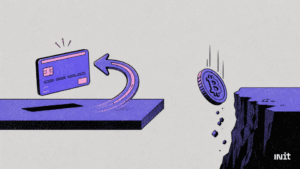
The payment industry often frames innovation as a race. Cards versus cash.Fintechs versus banks.Crypto versus traditional finance.Stablecoins versus instant payments. But this framing is often too simple. Instant bank payments and stablecoin payments are growing at the same time because they solve different problems. One is strongest inside existing financial systems. The other becomes more […]
Keep ReadingDon’t Miss These
The payment industry often frames innovation as a race. Cards versus cash.Fintechs versus banks.Crypto versus traditional finance.Stablecoins versus instant payments. But this framing is often too simple. Instant bank payments and stablecoin payments are growing at the same time because they solve different problems. One is strongest inside existing financial systems. The other becomes more […]
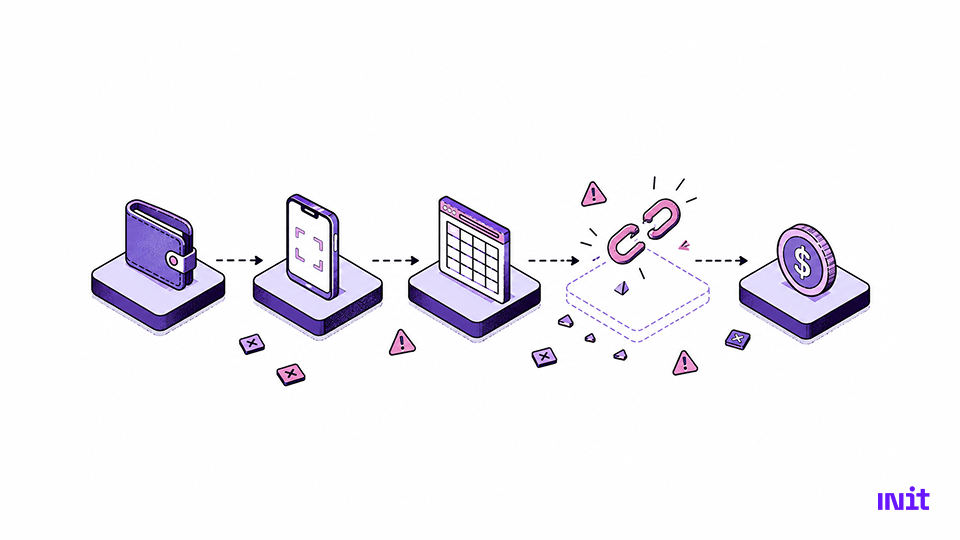
Many businesses start using crypto in the simplest possible way. Someone copies a wallet address.Someone sends a screenshot.Someone checks the transaction hash.Someone updates a spreadsheet.Someone confirms the payment in a chat. At the beginning, this can work. If a company processes one or two crypto payments a month, manual operations may feel manageable. The team […]
Crypto payments are often described through their strongest advantages: speed, finality, lower dependence on intermediaries, and continuous settlement. A payment can move directly from one party to another. It can settle outside banking hours. It can cross borders without passing through the same old chain of payment processors and correspondent banks. That is powerful. But […]
Crypto has a fragmentation problem. One app to store assets. Another to exchange them. A separate service to check a wallet. A website to compare fees. A blockchain explorer to find an old transaction. A support chat when something goes wrong. Each individual step may work. The friction appears in everything between them. INit takes […]
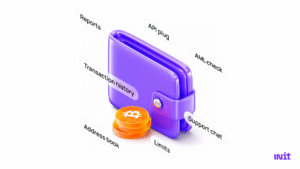
A crypto wallet can hold assets, receive funds, and send them somewhere else. For an individual user, that may be enough. For a business, it rarely is. The moment crypto becomes part of daily operations, the question changes. A company no longer asks only: “Where are the funds?” It also needs to know: Who can […]
Stablecoins were built to make money more portable. They can move across borders, operate outside banking hours, and settle on digital networks that are accessible globally. In theory, this should make the currency behind them less important. In practice, the opposite is happening.The more stablecoins move from crypto trading into real payments, business operations, and […]
Crypto transactions used to be judged mainly by two things: speed and completion. Did the payment go through?Did the funds arrive? For early users, that was often enough. Crypto was still technical, wallets were less polished, and many people accepted uncertainty as part of the experience. But as crypto moves into everyday payments, business flows, […]
Subscriptions changed the way people pay for digital products. Music, movies, cloud storage, software, education, productivity tools, premium communities — all of them moved from one-time purchases to recurring access. Instead of buying a product once, users now pay continuously for availability, convenience, and an ongoing relationship with a service. This model reshaped entire industries. […]
Speed has become one of the most repeated promises in modern finance. Instant transfers.Fast settlement.Real-time payments.Money that moves in seconds. For businesses, speed is valuable. No company wants to wait days for a payment to arrive or lose time because money is stuck between systems. But speed alone does not solve the full payment problem. […]