For a long time, crypto products were built around a single assumption: users come to crypto to hold assets or trade them. Wallets acted like vaults, exchanges like destinations, and most interactions were occasional rather than continuous.
But as crypto matured, that assumption stopped matching reality.
Today, users don’t want to “visit” crypto anymore. They want crypto to quietly fit into their daily routines — the same way banking, payments, and business tools already do. This shift marks a fundamental transition: from wallets as containers to workflows as systems.
Why Wallets Alone Are No Longer Enough
Early wallets were designed for safety and control, not for frequency or repetition. Sending funds required attention, manual confirmation, and deliberate intent. That was acceptable when transactions were rare and expensive.
In 2026, crypto is used more often, in smaller amounts, and across more scenarios. The wallet-as-a-vault model starts to feel limiting when users need to send, receive, route, and manage funds regularly.
At that point, the question changes from “Where do I store my assets?” to “How do I run my operations?”
Key shift:
- Users expect crypto tools to support repeatable actions
- One-off transactions turn into ongoing processes
- Holding becomes secondary to movement and usage
What “Workflows” Mean in a Crypto Context
A workflow isn’t a single click — it’s a sequence that happens smoothly and predictably. In traditional finance, workflows are invisible: salaries arrive, bills are paid, subscriptions renew.
Crypto is now building similar patterns.
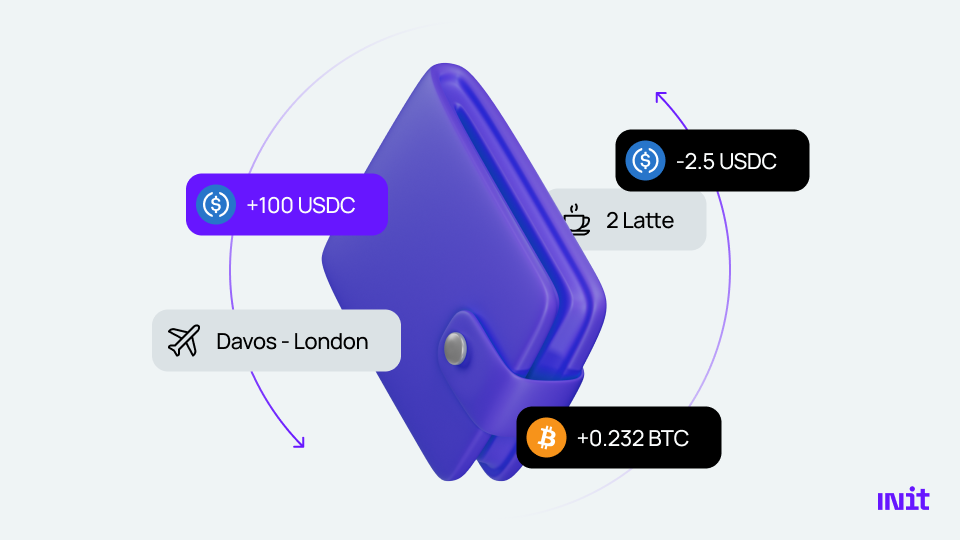
Instead of isolated actions, users rely on flows where value moves with purpose: funds arrive, get allocated, transferred, reported, and settled without constant decision-making.
This transition reduces mental load and increases trust. When users know what happens next, crypto feels less risky and more usable.
Key characteristics of crypto workflows:
- Repeatability instead of spontaneity
- Predictable outcomes instead of manual oversight
- Clear logic instead of ad-hoc decisions
Payments as the First Everyday Workflow
Payments were the earliest signal that crypto was moving beyond speculation. Stablecoins removed volatility from the equation, making crypto suitable for everyday exchange.
Once users started paying freelancers, suppliers, or partners in stablecoins, the friction became obvious. Repeating the same steps manually felt inefficient — and unnecessary.
That’s when tools had to evolve from “send funds” to “run payments.”
What changed with payments:
- Frequency increased
- Errors became more costly
- Speed and clarity mattered more than flexibility
Why Business Use Accelerated the Shift
Retail users tolerate friction. Businesses don’t.
As soon as companies started using crypto for settlements, payroll, or cross-border payments, expectations changed. Businesses needed consistency, documentation, compliance, and support — not experimental interfaces.
This forced crypto tools to mature. Workflows became a requirement, not a feature.
Business-driven expectations include:
- Reliable execution
- Clear reporting
- Built-in compliance logic
- Predictable fees
- Human support when issues arise
Automation Turns Crypto Tools into Utilities
A utility is something that works without demanding attention. In crypto, automation is what enables that transition.
Instead of asking users to approve every step, modern tools embed logic that handles routing, checks, and validations in the background. The user stays in control — but doesn’t need to supervise.
Automation reduces friction and mistakes, making crypto suitable for daily use.
Automation enables:
- Fewer manual decisions
- Lower error rates
- Faster execution
- Higher confidence in outcomes
Interfaces Shift from Power to Flow
As crypto tools become part of daily routines, interface design priorities change. Advanced dashboards and endless options give way to clarity and calmness.
Workflow-oriented interfaces guide users instead of overwhelming them. They explain what’s happening, show what’s next, and reduce unnecessary choices.
The goal is not to offer every possibility — but to keep users moving forward without friction.
Workflow-first UX focuses on:
- Clear states and statuses
- Minimal but meaningful actions
- Predictable flows
- Reduced cognitive load
Embedded Environments Enable Everyday Use
Another reason workflows are finally scaling is where crypto tools live. Embedded environments like messaging apps remove context switching and lower entry barriers.
When payments, coordination, and communication happen in the same place, crypto becomes a natural extension of daily activity — not a separate destination.
This environment supports workflows better than traditional standalone apps ever could.
Why embedded tools work:
- No installations
- No repeated logins
- Actions happen in context
- Faster adoption through sharing
Where INit Fits in This Evolution
This shift from wallets to workflows is central to how INit is built.
INit focuses on structured, repeatable usage rather than isolated actions. The product is designed to support:
- business-oriented flows,
- transparent fees,
- automated checks,
- and fast, human support.
Instead of asking users to relearn crypto for every transaction, INit helps integrate crypto into routines — making it feel predictable and dependable.
INit’s approach reflects the workflow mindset:
- clarity over complexity
- repetition over experimentation
- trust built through consistency
From Speculation to Infrastructure
Speculation still exists in crypto — but infrastructure is what lasts. Products that become utilities don’t rely on hype; they rely on reliability.
As crypto tools integrate into daily life, success will be measured not by features, but by how seamlessly they disappear into workflows.
The long-term winners will:
- reduce friction
- support repetition
- feel calm under pressure
- and scale with everyday use
Final Thought
Crypto’s future isn’t another wallet with more buttons.
It’s systems that quietly move value in the background — so users can focus on work, business, and life. The shift from wallets to workflows isn’t just a product trend. It’s how crypto becomes truly everyday.