Crypto payments are often described through their strongest advantages: speed, finality, lower dependence on intermediaries, and continuous settlement.
A payment can move directly from one party to another. It can settle outside banking hours. It can cross borders without passing through the same old chain of payment processors and correspondent banks.
That is powerful. But mass adoption is not built only on what happens when a transaction goes right.
It is also built on what happens when something goes wrong.
A customer pays the wrong merchant.
A product never arrives.
A refund is needed.
A subscription is charged incorrectly.
A counterparty becomes suspicious.
A user makes a mistake.
Traditional card payments have spent decades building systems around these moments: refunds, disputes, chargebacks, buyer protection, fraud handling, and liability rules.
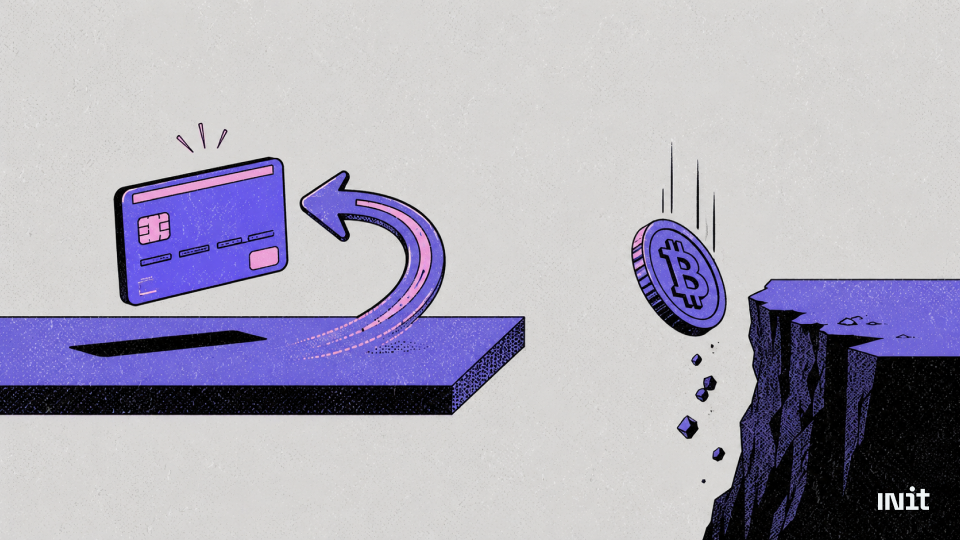
Crypto, by design, often moves in the opposite direction. Transactions are fast, direct, and difficult to reverse. That creates a fundamental product question:
Can crypto payments become mainstream without solving the recourse problem?
Settlement Is Not the Whole Payment Experience
In crypto, settlement is often treated as the final achievement.
The transaction is confirmed.
The funds arrive.
The payment is complete.
From an infrastructure perspective, that may be true. From a user or merchant perspective, the payment experience can continue long after settlement.
A payment may need to be refunded, matched to an invoice, reviewed by support, disputed by a customer, or explained to a compliance partner. The real world is messy, and payment systems have to operate inside that mess.
This is where cards have an advantage that crypto often underestimates.
Card payments are slower and more expensive in some contexts, but they include structured processes for exceptions. If something goes wrong, the user usually has a path: contact the merchant, contact the issuing bank, open a dispute, request a chargeback, provide evidence, wait for review.
That path is not perfect. It can be abused, delayed, or frustrating for merchants.
But it exists.
In crypto, the transaction may settle faster, yet the responsibility for avoiding mistakes often shifts closer to the user.
Cards Were Built Around Trust After the Payment
Card networks do more than move money.
They coordinate roles between the cardholder, merchant, issuer, acquirer, and payment network. They define how authorisation works, how disputes are handled, who carries liability in specific cases, and what evidence may be required.
This structure is one reason cards became comfortable for everyday commerce. A consumer can buy from a new online store without trusting it completely. The payment system provides a layer of recourse if the merchant fails to deliver or if the transaction was unauthorised.
That does not mean card payments are always fair or efficient. Chargebacks can be expensive for merchants. Disputes can take time. Fraud rules can be complex. But for mainstream users, the psychological effect is important. They are not entering the transaction alone. There is a system behind the payment that can respond after the fact.
Crypto payments, especially self-custodial ones, often lack this layer. They can give users more control before the payment, but they offer fewer built-in protections after it.
Finality Is a Feature — Until It Becomes a Burden
Crypto finality is not a flaw. For many use cases, it is exactly the point.
Businesses may value final settlement because it reduces the uncertainty of chargebacks. Cross-border payments may benefit from fewer intermediaries and faster movement. Stablecoins can support continuous settlement and make value transfer more accessible across regions.
But finality changes the burden of responsibility. If a payment cannot easily be reversed, the product must help users make better decisions before they confirm it. That means the interface becomes more important, not less. A crypto payment product should not simply ask users to paste an address and press send. It should help them understand the payment before it becomes final.
- Who is the recipient?
- What network is being used?
- What fee applies?
- What amount will arrive?
- Is the address risky?
- Is the transaction connected to the right purpose?
- Can the user find the record later?
Finality can work well when the decision environment is strong. Without that environment, it becomes a source of anxiety.
The Stablecoin Retail Payment Challenge
Stablecoins are often presented as the bridge between crypto infrastructure and everyday payments.
They reduce volatility compared to many digital assets, move globally, and can settle continuously. For merchants and platforms, they may also offer advantages in cross-border flows, high-friction corridors, and digital-first commerce.
But stablecoins inherit much of crypto’s reversibility problem. A stablecoin payment may settle efficiently, yet the system around it may still lack standardised consumer protection, consistent refund logic, or a simple dispute process. In card payments, many of these functions are embedded into the network and institutional structure.
In stablecoin payments, they are often handled by:
- the user,
- the merchant,
- the wallet provider,
- the payment processor,
- an external support process,
- or legal agreements outside the chain.
This creates a fragmented experience. The payment rail may be modern, but the exception handling may still feel unfinished.
That is why stablecoins are more likely to gain traction first in contexts where both sides understand the payment flow: business payments, platform payouts, cross-border settlements, closed-loop systems, and crypto-native services.
Open retail commerce is harder because it requires not only fast settlement, but predictable recourse.
What Crypto Can Learn From Cards
Crypto does not need to copy card networks completely. In fact, copying the card model too closely would remove some of crypto’s strongest advantages: direct settlement, user control, lower dependence on intermediaries, and programmable payment logic.
But crypto can learn from the product principles behind cards.
| Payment Problem | How Cards Usually Handle It | What Crypto Needs Instead |
|---|---|---|
| Wrong or unauthorised payment | Dispute and chargeback process | Stronger pre-confirmation checks and risk alerts |
| Refund needed | Merchant refund through card rails | Clear refund workflows and counter-payment logic |
| User does not recognise charge | Bank/card statement and dispute path | Detailed transaction history and readable records |
| Merchant does not deliver | Buyer can raise a claim | Escrow, merchant reputation, or platform-level support |
| Fraud risk | Liability rules and issuer review | AML checks, address screening, and transaction previews |
| Customer confusion | Bank support and card network rules | Human support, clear statuses, and visible fees |
The lesson is not that every crypto transaction should become reversible. The lesson is that users need a reliable path before and after payment. Crypto is strong at execution. To become mainstream, it also has to become stronger at explanation, prevention, and exception handling.
The Role of Previews and Payment Confirmation
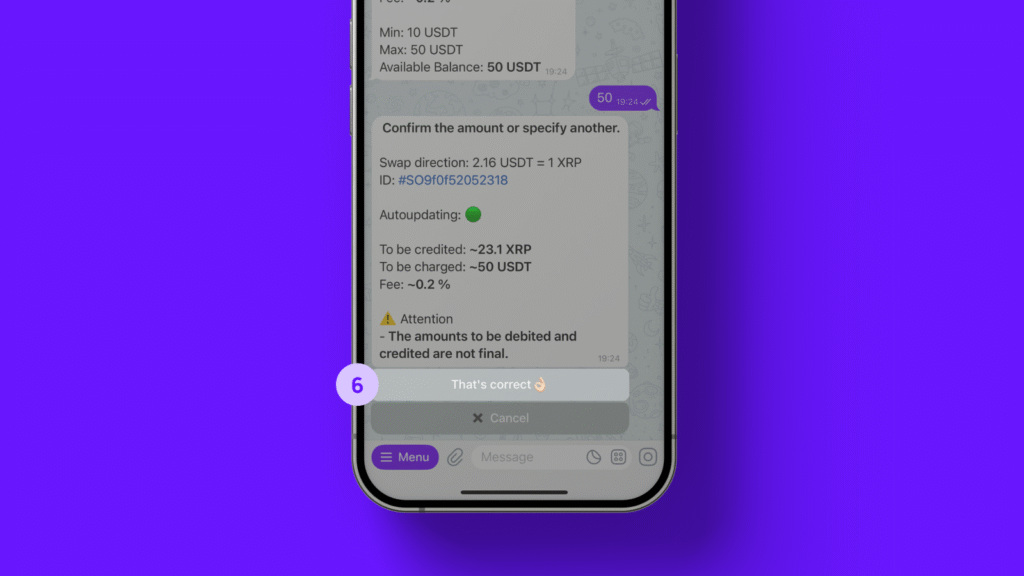
Because crypto payments are difficult to reverse, the moment before confirmation becomes extremely important. A strong preview screen is not just a UX detail. It is a protection layer.
Before sending funds, users should be able to understand:
- the recipient,
- the amount,
- the network,
- the fee,
- the final expected result,
- and the risk signals connected to the transaction.
This reduces the need for post-payment correction by improving pre-payment clarity. That is one of the biggest differences between crypto and cards. Card systems can absorb more confusion after the transaction. Crypto products need to prevent more confusion before the transaction.
This does not mean overwhelming users with technical information. It means showing the right context in plain language, at the moment when it still matters.
Why Support Still Matters in Irreversible Payments
Some crypto narratives assume that better infrastructure removes the need for support. In reality, irreversible payments make support more important.
Users need help understanding statuses, fees, counterparties, transaction records, failed attempts, confirmations, and next steps. Support cannot always reverse a payment. But it can reduce confusion, explain what happened, help locate records, guide users through risk checks, and provide clarity when the interface alone is not enough.
This is especially important for businesses. A business does not only need to know that the transaction has been settled. It may need proof, documentation, AML context, fee details, or confirmation for an internal process.
In crypto payments, support becomes part of the trust layer. Not because every issue can be undone, but because users need a human path when financial uncertainty appears.
Where INit Fits Into This Conversation
INit does not try to change the basic nature of crypto finality. That would be the wrong promise. Instead, it focuses on reducing the chaos around the transaction.
Inside a Telegram-native environment, INit gives users tools that help them act with more clarity before and after payment. Transaction previews, transparent fee information, AML checks, address book functionality, transaction history, and accessible support all contribute to a more structured payment experience.
These features matter because they help users avoid mistakes rather than depend on reversing them later.
AML checks can help evaluate addresses and counterparties before funds move. Clear fee information helps users understand the cost of a transaction in advance. Transaction history gives users a record to return to. Support provides context when something feels unclear.
- For personal users, this makes crypto actions easier to trust.
- For businesses, it creates a more practical operational layer: payments are not just sent, but checked, recorded, and managed with more visibility.
INit does not make crypto behave exactly like cards. It does something more realistic: it makes irreversible payments easier to use responsibly.
Final Thought
Cards taught users that payments should include a way to handle mistakes. Crypto taught users that payments can settle directly, globally, and quickly. The next generation of payment products has to combine the best parts of both ideas.
Fast settlement is valuable.
Finality is valuable.
Fewer intermediaries can be valuable.
But users also need clarity, support, risk checks, records, and refund logic. The future of crypto payments will not be defined only by how fast money moves. It will be defined by how well the product answers the question: What happens if something goes wrong?