Telegram has rapidly evolved into one of the most active environments for crypto activity — from simple transfer bots to multi-feature platforms handling swaps, AML screening, portfolio analytics, and even business payments.
But with this growth comes a critical question:
How do Telegram-based crypto bots keep millions of users safe?
Behind every “instant” swap or transfer lies a complex security architecture — invisible to the user, yet essential for trust. These hidden layers determine whether a platform is ready for long-term growth, regulatory expectations, and real financial use cases.
This article breaks down the real security mechanisms that modern Telegram bots rely on, why they matter more than ever in late 2025, and how products like INit implement these systems to ensure both safety and simplicity.
1. Why Security Looks Different Inside Telegram
Unlike traditional exchanges or mobile apps, Telegram bots operate inside a messaging environment.
That means:
- no dedicated app permissions
- no OS-level sandbox
- limited access to device-level security controls
Yet, paradoxically, bots have become one of the fastest-growing crypto interfaces.
Why? Because people trust the UX — but that trust depends entirely on invisible infrastructure.
Behind the tap-to-swap experience, bots must compensate for the lack of device-level protections with a strong backend security model, automated logic, and continuous monitoring.
In other words:
security shifts from the user’s device to the platform’s architecture.
2. The Core Security Layers Modern Bots Rely On
Below is a breakdown of the invisible shields powering safe Telegram-based financial operations.
Each of these layers works behind the scenes, often without the user ever seeing it.
2.1 Automated AML / KYT Screening
The first line of defense.
Bots now evaluate every transaction and counterpart wallet in seconds.
Checks typically include:
- sanction list screening
- blacklisted addresses
- risk category scoring
- behavioral abnormality patterns
- exposure to mixers or high-risk flows
2.2 Policy Engines and Transaction Rules
Security isn’t just about knowing risks — it’s about acting on them automatically.
Modern bots use dynamic policy engines that can:
- block high-risk addresses
- restrict abnormal transaction volumes
- detect suspicious frequency spikes
- flag dangerous behavioural patterns
- enforce region- or asset-specific restrictions
This is where compliant bots differentiate from “quick swap bots”.
Policy engines are becoming a core expectation in the MiCA era.
2.3 Smart Routing With Built-In Safety Checks
Routing liquidity across pools requires:
- price integrity
- slippage protection
- unreliable pool avoidance
- contract-level risk monitoring
Bots without routing logic expose users to rug pools, spoofed liquidity, and manipulated pricing.
INit’s swap engine evaluates routes for safety and reliability, not only price efficiency — reflecting the compliance-first direction of the ecosystem.
2.4 Infrastructure-Level Security
Reliable Telegram bots use:
- fully isolated backend environments
- encrypted execution layers
- IP logging and anomaly detection
- load-balancers and DDoS protection
- rate limiting to block abuse
- hardware-level signing or separation (if integrated with custody or policy tools)
The average user sees none of this — but it’s what makes high-volume bots stable.
2.5 Identity, Verification & Trusted User Layers
With MiCA rolling out, verification is becoming part of safety.
Instead of forcing intrusive onboarding, Telegram bots adopt lightweight identity layers that improve risk mitigation without hurting UX.
INit follows this model by:
- rewarding verification with AML credits
- adding optional compliance features for users and businesses
- integrating identity into business APIs for safer payment flows
The future of Telegram crypto is identity-enabled — but frictionless.
3. Why These Layers Matter Now (Late 2025)
We’re entering an era where:
- regulators examine every stage of crypto flows,
- stablecoin oversight has already begun under MiCA,
- centralized exchanges face increasing pressure,
- businesses turn to Telegram bots for payments,
- and scams/phishing remain widespread.
Telegram bots are becoming micro financial institutions, and institutions need real defenses.
This is why “invisible shields” now define which platforms succeed — not just UX or fees.
The bots built without strong security layers may still operate, but they won’t scale into mainstream or business adoption. Telegram users now expect safety to be automatic.
4. INit’s Approach: Security Without Friction
INit was designed for the new landscape — one where users want:
- instant swaps
- minimal steps
- transparent processes
- compliance-friendly operations
- safe counterparties
- and simple UX
All without forcing Web2-style onboarding.
INit integrates:
- automated AML monitoring
- policy-based protection
- risk-scored routing
- transparent fee structure
- business-ready compliance tools
- AML Packs
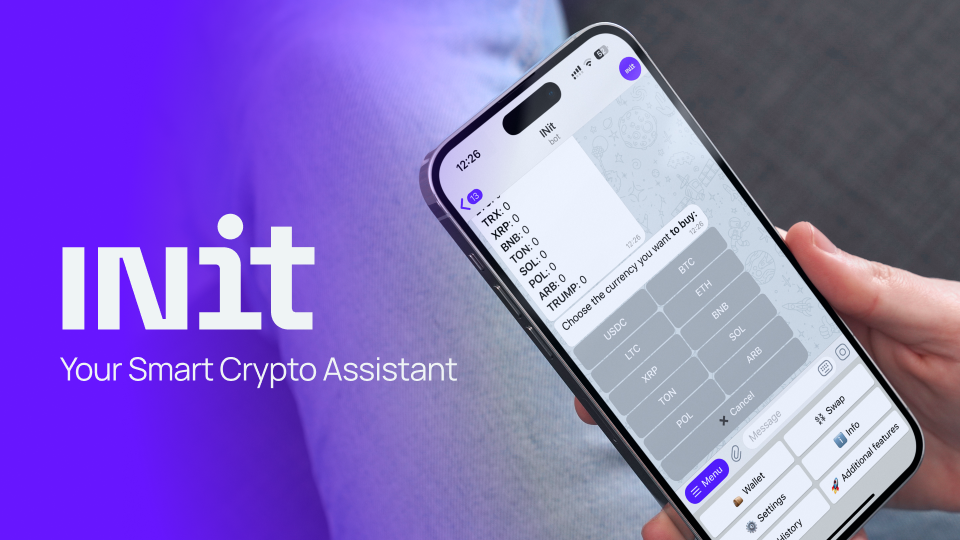
This combination allows the bot to remain simple, fast, and intuitive — while operating with a security standard that matches regulated markets.
5. The Future: Security Will Become the New Differentiator
In 2026 and beyond, Telegram bots will compete less on:
- speed
- number of networks
- or meme-level branding
And far more on:
- compliance readiness
- infrastructure strength
- automated monitoring
- transparency
- business compatibility
Users — and especially businesses — will choose the platforms that make them feel safe by default.
Security will stop being a checkbox.
It will become a product feature, a brand value, and a competitive edge.
Bots without these invisible shields will fade.
Bots with them will build the next generation of Telegram-native financial infrastructure.
Conclusion
The strongest security systems are the ones users never see.
Telegram-based crypto platforms rely on complex, layered, automated architectures that detect risks, block unsafe activity, protect liquidity, and create trust.
These invisible shields are what will define the next stage of the industry — and they are the reason platforms like INit are already prepared for the compliance-driven era ahead.
Telegram bots are becoming financial tools.
Financial tools need real protection.
And the future belongs to platforms that combine safety with simplicity.