For years, crypto products competed on speed, liquidity, and the number of features they offered. But as the industry matures and user expectations evolve, another factor is quietly becoming a decisive advantage: fee transparency.
In a market where many platforms advertise “low fees” or even “zero fees,” the true cost of a transaction is often hidden in spreads, routing logic, execution timing, or withdrawal conditions. For users, this creates uncertainty. For products, it creates a long-term trust problem.
Transparency around fees is no longer just a technical detail. It is becoming a strategic design choice — one that shapes trust, retention, and the long-term sustainability of crypto platforms.
The Illusion of “Free”
Crypto users frequently encounter products that appear free or extremely cheap at first glance. However, costs can exist in several hidden forms:
- widened spreads during swaps
- dynamic routing that prioritizes platform revenue
- withdrawal fees applied later in the process
- unclear network costs
- execution price differences
These costs are rarely presented in a single place. Instead, they are distributed across multiple steps of the transaction flow. This fragmentation creates a situation where users cannot easily answer a simple question: How much will this transaction actually cost me?
When the answer is unclear, trust erodes.
Why Transparency Is Becoming a Competitive Advantage
In traditional finance, pricing clarity is heavily regulated. Crypto historically operated with far fewer constraints, which allowed platforms to experiment with different fee models.
But the market is evolving.
Users are becoming more sophisticated.
Regulators are demanding clearer disclosures.
Businesses integrating crypto require predictable cost structures.
In this environment, transparency creates several advantages.
1. Trust and Credibility
When users understand the pricing structure before initiating a transaction, they feel more confident using the product repeatedly.
2. Better Decision-Making
Clear fees allow users to compare platforms accurately and choose the best execution path.
3. Reduced Support Load
Many customer support requests in crypto originate from confusion about fees. Transparent models significantly reduce this friction.
4. Long-Term Retention
Short-term fee optimization may increase immediate revenue, but transparency strengthens long-term relationships with users.
The Rise of Fee Grids
One emerging solution to fee opacity is the fee grid — a structured table showing how fees change depending on factors such as:
- transaction size
- loyalty level
- trading volume
- network conditions
Fee grids allow users to see the logic behind pricing rather than guessing it.
Instead of hiding costs within execution, platforms present them as structured information.
Below is a simplified example of how a fee grid may look:
| Transaction Volume | Standard Fee | Reduced Fee | VIP Tier |
|---|---|---|---|
| $0 – $1,000 | 0.40% | 0.30% | 0.20% |
| $1,000 – $10,000 | 0.35% | 0.25% | 0.18% |
| $10,000+ | 0.30% | 0.20% | 0.15% |
The advantage of this model is clarity.
Users understand why a fee applies and how it can change.
Fee Calculators: Turning Transparency into Usability
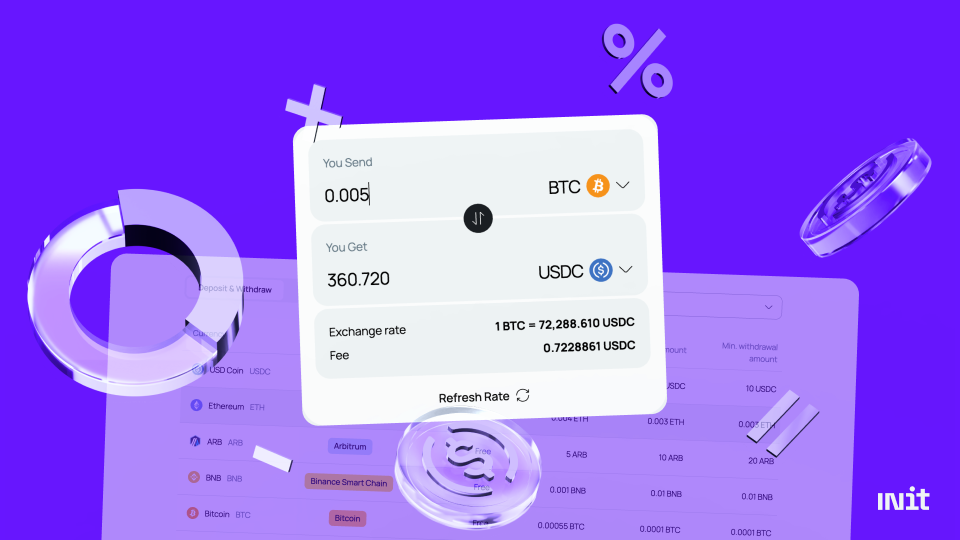
Transparency alone is not enough. It must also be usable. This is where fee calculators play an important role.
A fee calculator allows users to:
- input the transaction amount
- instantly see estimated fees
- preview the final amount received
- understand how the cost changes with volume
Instead of calculating percentages manually, users can simulate transactions before executing them. This reduces uncertainty and improves confidence in the platform. For businesses or frequent users, calculators also make cost planning significantly easier.
Dynamic Fee Models
Many modern crypto platforms rely on dynamic pricing models rather than fixed percentages. Dynamic models may adjust fees based on:
- liquidity conditions
- network congestion
- routing complexity
- transaction size
- loyalty levels
Without transparency, these models can feel unpredictable. But when properly communicated, dynamic models actually allow platforms to offer better execution and more efficient pricing.
The key difference lies in visibility.
If users understand the mechanism, dynamic fees feel logical.
If they do not, the system feels arbitrary.
Transparency as Product Design
Fee transparency is not only about documentation.
It is also about interface design.
The best products present pricing information in three places:
- Before the transaction — so users can estimate cost.
- During confirmation — so users see the exact fee applied.
- In documentation — so the pricing model is always accessible.
When these layers align, users rarely feel surprised by costs. Surprise is the real enemy of trust in financial products.
How INit Approaches Fee Transparency
This philosophy is reflected in how INit structures its fee communication. Rather than hiding fees within execution logic, INit provides users with clear visibility into how pricing works.
Key elements include:
- publicly available fee information on the website,
- structured fee explanations within the product,
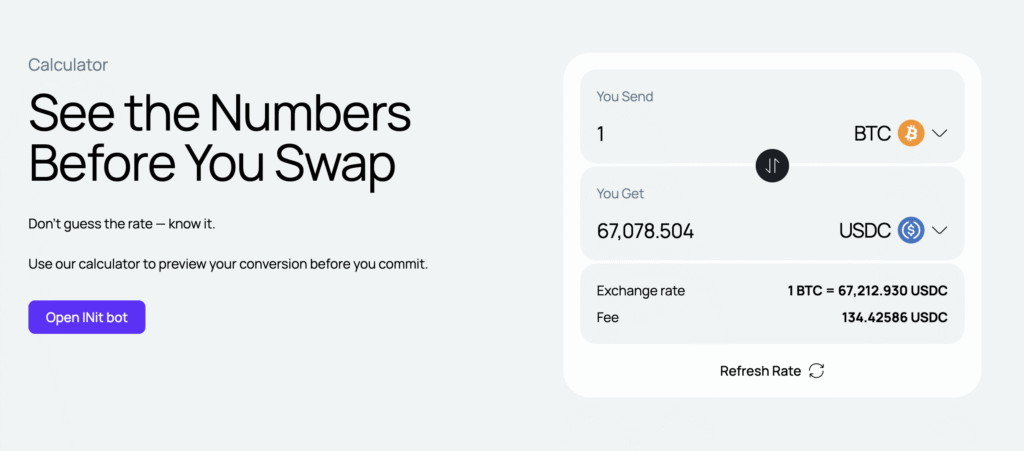
- a dedicated fee calculator that allows users to estimate costs before making a transaction.
The calculator helps users simulate transactions and understand the final outcome before confirming an action. This approach reduces uncertainty and allows both individuals and businesses to operate with predictable costs.
Transparency is not treated as an afterthought — it is part of the product design.
Why This Matters for the Future of Crypto
As crypto products move beyond trading into real operational use — including payments, treasury management, and business integrations — fee transparency will become even more important.
Businesses require:
- predictable cost structures
- clear transaction reporting
- reliable pricing models
Without transparency, integrating crypto into operational workflows becomes difficult. Platforms that prioritize pricing clarity will therefore have a structural advantage as the market matures.
The Strategic Value of Clarity
Crypto once celebrated complexity as a sign of sophistication. But the next phase of the industry is being defined by something different:
clarity.
Transparent pricing builds trust.
Trust builds retention.
Retention builds sustainable ecosystems.
In the long run, users rarely choose the platform with the lowest advertised fee. They choose the one where they always understand the real cost of what they are doing. And that quiet clarity may become one of the most powerful competitive advantages in crypto.