For years, crypto payments were considered a future possibility, viewed as an experimental alternative to traditional finance and often linked to volatility, uncertainty, and niche applications. However, this is beginning to change.
Businesses are no longer questioning the value of crypto payments.
They are quietly beginning to adopt them.
This is not a marketing initiative.
Nor is it simply following a trend.
Instead, crypto is being used as a practical tool.
This shift is subtle and often goes unnoticed by the public. However, behind the scenes, more companies are integrating crypto into their financial operations, motivated by speed, cost efficiency, and global accessibility.
The Limitations of Traditional Payment Systems
To understand this shift, it is important to consider the constraints businesses encounter with traditional financial infrastructure. Cross-border payments remain slow and fragmented. Even in 2026, international bank transfers can take several days to settle, especially when multiple intermediaries are involved. Each intermediary introduces additional fees, delays, and potential points of failure.
Costs are often unpredictable. Businesses may not know the exact amount received until a transaction is complete, due to currency conversion spreads, correspondent banking fees, and hidden charges.
Operational complexity is another challenge. Managing payments across multiple jurisdictions involves navigating various banking systems, currencies, and compliance requirements. Over time, these inefficiencies accumulate, creating a structural burden.
Why Crypto Payments Solve Real Problems
Crypto payments do not replace all aspects of traditional finance, but they address several key inefficiencies. Speed is one of the most immediate advantages. Transactions can settle within seconds or minutes, regardless of geography. This significantly reduces waiting time and improves cash flow.
Cost efficiency is another significant factor. While crypto transactions are not always free, they are generally more transparent and predictable. Businesses can often estimate transaction costs in advance, which is challenging in traditional systems.
Global accessibility also transforms company operations. Crypto eliminates the need for complex banking relationships in different regions, allowing a single system to send and receive value across borders.
Beyond these technical benefits, crypto is becoming operationally viable.
From Experimentation to Daily Operations
The real shift is not that businesses are merely experimenting with crypto. They are starting to rely on it.
Companies are using crypto for:
- paying international contractors
- settling invoices across borders
- managing treasury in stablecoins
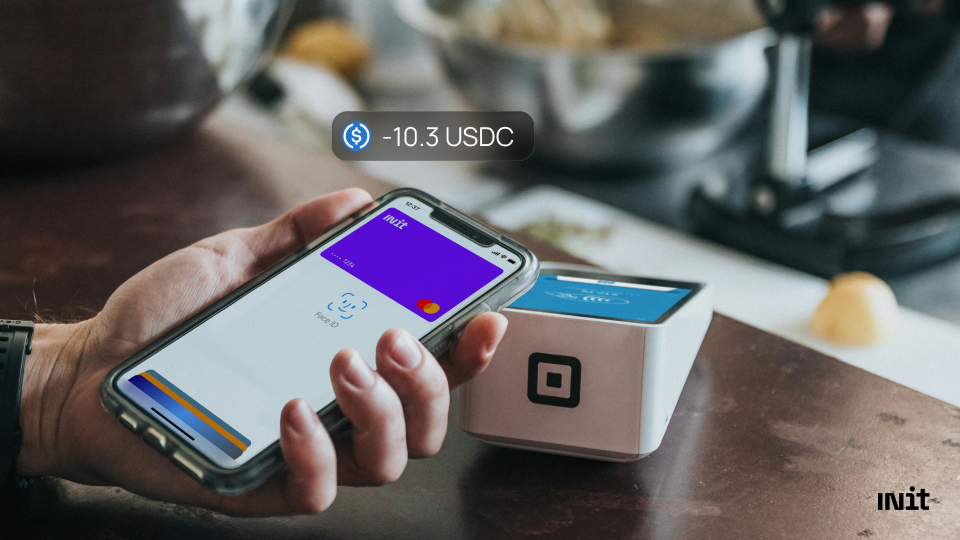
- accepting payments from global customers
- moving funds between entities faster
These are not speculative use cases. They are everyday financial operations. Once crypto becomes integrated into a workflow, it is no longer optional.
The Role of Stablecoins
The rise of stablecoins has been a major enabler of this shift. Volatility was one of the main barriers to business adoption. Holding assets that fluctuate significantly in value is not practical for operational finance.
Stablecoins solve this problem by providing:
- price stability
- fast settlement
- compatibility with blockchain infrastructure
Stablecoins allow businesses to benefit from crypto’s speed and accessibility without incurring market risk. As a result, stablecoins are becoming the foundation of crypto payment systems.
Where Efficiency Becomes a Competitive Advantage
For many businesses, adopting crypto payments is driven by efficiency rather than innovation.
- Faster settlements improve liquidity.
- Lower fees increase margins.
- Simpler infrastructure reduces operational overhead.
Over time, these improvements accumulate. Companies that optimize payment flows gain an advantage over those that continue to rely on slower, more expensive systems. This is why the shift is occurring quietly.
It is not driven by hype.
It is driven by economic factors.
What Still Holds Businesses Back
Despite the advantages, adoption is not universal. Businesses continue to face challenges when integrating crypto into their operations.
Regulatory uncertainty remains a concern in many regions. Companies need to ensure that their payment flows comply with local laws and reporting requirements. User experience is another barrier. Many crypto tools are designed for individuals rather than businesses, making integration into structured workflows difficult.
Trust is also a key factor. Businesses require systems that are predictable, transparent, and reliable. Without these qualities, crypto cannot replace existing infrastructure. These challenges are gradually being addressed, and modern platforms play a key role.
The Emergence of Business-Ready Crypto Tools
A new category of crypto products is emerging: tools designed specifically for operational use.
These platforms focus on:
- structured payment flows
- compliance integration
- transparent fee models
- API access for automation
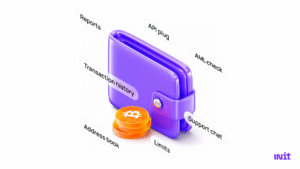
- reporting and audit capabilities
These tools go beyond simple wallets or exchanges and become part of a company’s stage; crypto transitions from a tool to a system.
Where INit Fits Into This Shift
This evolution is evident in how INit approaches crypto payments.
INit is designed to support both personal and business use cases, rather than focusing solely on individual users.
The platform provides:
- fast transaction execution within a familiar Telegram environment
- transparent fee structures that can be reviewed in advance
- integrated compliance processes
- support for structured financial flows
- API capabilities for business integration
With a simple interface and structured systems, INit helps businesses use crypto in a predictable, manageable way.
Final Thought
Crypto payments are not replacing traditional finance overnight. However, they are reshaping how value moves across borders, between businesses, and within operational systems.
The most important part of this transformation is not speed or cost alone. It is the ability to create simpler, more efficient, and more global financial workflows.
This is why businesses are quietly but steadily moving to crypto. Ultimately, the best systems are not those that attract attention. They are the ones that simply work better.