For years, the word “regulation” has sparked anxiety across the crypto world.
To many, it sounded like the opposite of what this industry stood for — freedom, innovation, decentralization.
But as the market matures, it’s becoming clear: good regulation doesn’t destroy innovation — it enables it.
From Chaos to Clarity
In the early days of crypto, “no rules” was a feature, not a flaw.
It allowed builders to experiment and push boundaries. Yet as adoption grew, so did complexity — and the lack of legal clarity started to hurt both users and legitimate projects.
Ambiguous laws, inconsistent enforcement, and bad actors using loopholes created an uneven playing field.
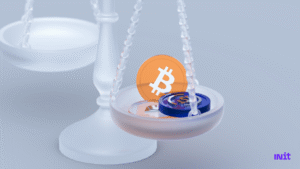
That’s where regulation steps in — not as a cage, but as a framework that separates innovation from speculation.
Why Clear Rules Matter
Every market that grows eventually needs structure.
For crypto, that structure can bring three essential benefits:
- Trust — Users feel safer when they know who’s behind a project and what standards it follows.
- Access — Banks, payment providers, and institutional investors can finally engage when compliance is clear.
- Longevity — Sustainable growth depends on transparency, not hype.
When done right, regulation turns crypto from a niche experiment into a recognized part of the global economy.
MiCA: Europe’s Turning Point
The European Union’s MiCA (Markets in Crypto-Assets Regulation) is one of the first comprehensive attempts to do exactly that — to build a transparent environment for exchanges, wallets, and token issuers.
MiCA doesn’t aim to replace innovation with bureaucracy. Instead, it sets baseline standards for licensing, consumer protection, and AML (anti-money laundering).
For responsible projects, it’s not a threat — it’s a chance to prove legitimacy on a global scale.
Compliance as a Competitive Edge
At INit, we see compliance not as a checkbox, but as a strategic advantage.
Integrating AML/KYT tools, transparent fee models, and automated policy rules makes it easier for users and businesses to operate with confidence.
It’s the difference between a product that works today — and one that will still work tomorrow, when regulations tighten.
By embedding these systems into our Telegram-native exchange, we’re preparing for a future where speed and simplicity meet accountability.
Regulation and Freedom Can Coexist
The myth that regulation kills crypto comes from misunderstanding what freedom really means.
True freedom isn’t the absence of rules — it’s the ability to build, trade, and innovate within a framework that protects everyone involved.
When users trust the system, adoption follows.
When businesses can operate safely, the ecosystem grows.
And when projects like INit align innovation with compliance, crypto finally earns its place in the mainstream.
The Bottom Line
Regulation isn’t the end of crypto’s story — it’s the beginning of a new chapter.
A chapter where digital assets, financial institutions, and users share a common language of trust and transparency.
The next wave of adoption won’t come from hype, but from clarity.
And INit is building right at that intersection — where technology meets compliance, and crypto becomes ready for everyone.