For years, one small but persistent friction defined the crypto experience: switch network.
Ethereum to BNB Chain.
Polygon to Arbitrum.
Mainnet to testnet.
For experienced users, this became second nature. For everyone else, it remained confusing, error-prone, and unnecessary. But this friction is starting to disappear.
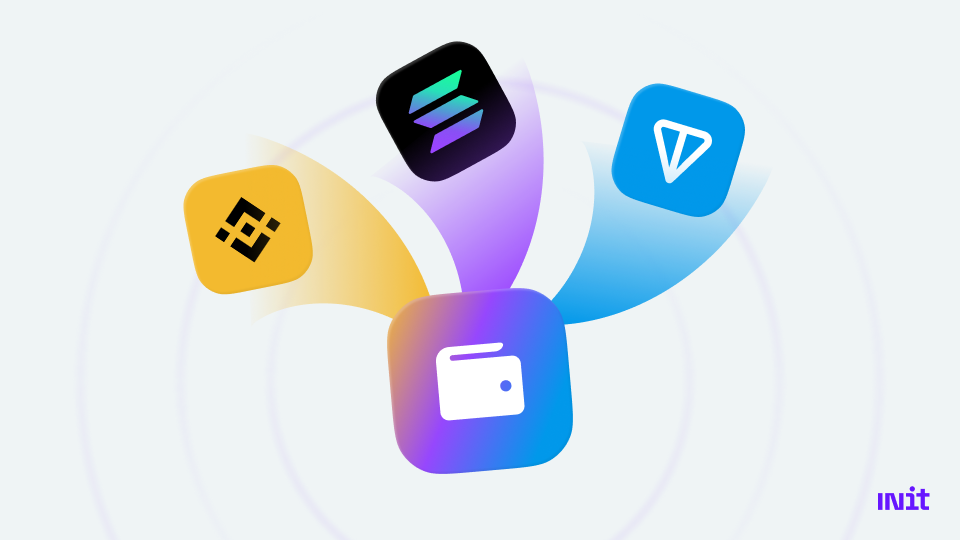
As crypto matures, the industry is moving toward a new paradigm — one where users no longer need to think about networks at all. Instead of switching between chains, they interact with a unified experience where complexity is handled behind the scenes.
This shift may seem subtle, but it represents a fundamental change in how crypto products are designed — and how users engage with them.
Why Wallet Switching Existed in the First Place
Early blockchain ecosystems were built as independent systems.
Each network had:
- its own tokens
- its own infrastructure
- its own transaction rules
- its own wallets or configurations
Interoperability was limited. Moving between chains required manual actions:
- selecting the correct network
- adjusting RPC settings
- bridging assets
- confirming compatibility
This design reflected the architecture of the underlying technology — but not the expectations of users. Users do not think in networks. They think in outcomes. They want to send funds, complete a payment, or execute a swap — without needing to understand which chain makes it happen.
The Cost of Fragmentation
Network fragmentation introduces several layers of friction.
- First, it increases the likelihood of user error. Sending funds on the wrong network can result in delays, additional fees, or even loss of funds.
- Second, it slows down interactions. Every manual step — switching networks, confirming settings — adds time and cognitive load.
- Third, it creates inconsistency. The same action may behave differently depending on the network, making it harder for users to build intuition.
Over time, these issues compound. What feels like a small inconvenience becomes a barrier to adoption.
The Shift Toward Abstraction
The industry is now moving toward abstraction layers that hide network complexity. Instead of exposing chains, modern systems:
- automatically select the optimal network
- route transactions across chains
- handle bridging in the background
- unify balances across ecosystems
From the user’s perspective, the experience becomes seamless.
They do not switch networks.
They simply act.
This shift mirrors what happened in other areas of technology. Users do not think about servers when using cloud services. They do not think about protocols when sending a message.
Crypto is moving in the same direction.
From Multi-Chain to Chain-Agnostic
There is an important distinction between multi-chain and chain-agnostic systems.
Multi-chain systems support multiple networks, but still require users to manage them.
Chain-agnostic systems remove that responsibility entirely.
| Approach | User Experience | Responsibility |
|---|---|---|
| Single-chain | Limited but simple | System |
| Multi-chain | Flexible but complex | User |
| Chain-agnostic | Flexible and simple | System |
The future lies in chain-agnostic design. It allows platforms to maintain flexibility while eliminating unnecessary complexity for users.
The Role of Infrastructure
Unified experiences do not eliminate complexity — they relocate it.
Behind the scenes, systems must handle:
- cross-chain liquidity routing
- bridge integrations
- gas optimization
- failure handling
- security validation
This requires sophisticated infrastructure. The better the infrastructure, the less the user sees. Invisible complexity becomes the foundation of visible simplicity.
Security and Trust in a Unified Model
Removing network visibility introduces new challenges.
Users lose a layer of control, which means platforms must compensate with:
- transparent transaction previews
- clear fee breakdowns
- reliable execution
- strong security checks
Trust becomes critical. Users must believe that the system will choose the correct path on their behalf. This is why unified experiences must be paired with predictability and transparency.
Where INit Fits Into This Shift
This transition toward unified crypto experiences is reflected in how INit approaches product design.
Operating inside Telegram, INit reduces the need for traditional wallet management and network selection. Instead of requiring users to switch between chains, the platform focuses on:
- simplified transaction flows
- clear presentation of outcomes
- transparent fee structures
- backend systems that handle execution logic
The goal is not to expose every technical layer — but to make interactions feel consistent and intuitive.
Users do not need to think about networks.
They focus on completing actions.

What This Means for the Future
As abstraction improves, the concept of “network switching” may disappear entirely.
Users will:
- interact with unified balances
- execute cross-chain actions seamlessly
- rely on systems to handle routing and optimization
Developers and infrastructure providers will continue working with networks.
Users will not need to. Crypto will move closer to the standard set by other technologies — where complexity exists, but is no longer visible.
Final Thought
Wallet switching was never a feature. It was a workaround. As the industry evolves, that workaround is being replaced by something better: unified, chain-agnostic experiences.
The most successful products will not be those that support the most networks. They will be the ones that make networks disappear.