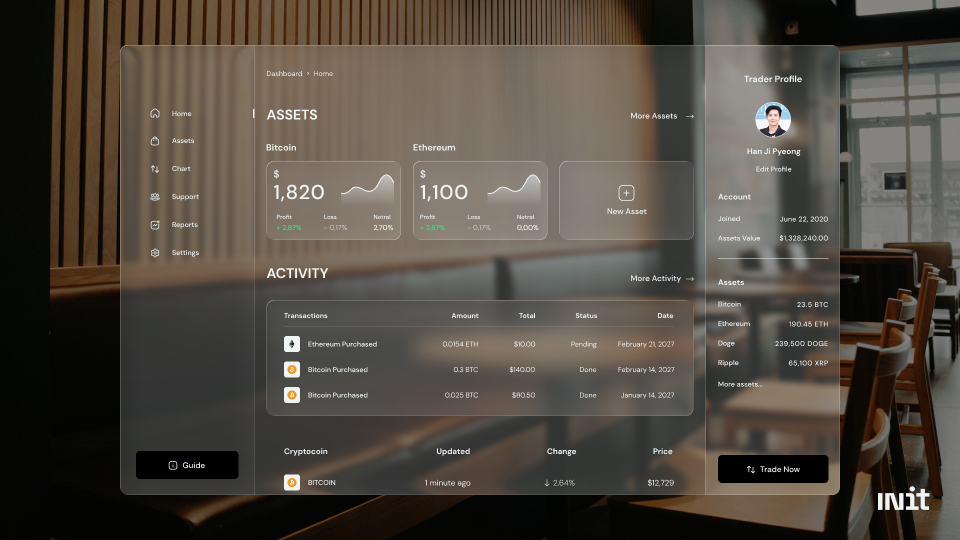
For most of its existence, crypto has been defined by interfaces.
You opened a wallet. You navigated menus. You confirmed transactions through screens filled with numbers, addresses, and technical details. Every action required intention, attention, and often a certain level of expertise.
But that model is starting to change.
As crypto moves closer to everyday use, the role of the interface itself is being questioned. The industry is gradually shifting from complex visual environments to simpler forms of interaction — and in some cases, toward removing the interface altogether.
The question is no longer how to design better screens.
It is whether screens will remain central at all.
From Interfaces to Interactions
The earliest crypto products were built for control. Interfaces exposed everything — from gas fees to transaction hashes — because the users at the time expected and understood that level of detail. However, as the audience expanded, this level of exposure became a barrier rather than a feature.
Users did not want to manage infrastructure.
They wanted to complete actions.
This shift led to a new design approach: instead of optimizing the interface, products began optimizing the interaction itself. Actions became simpler. Steps were reduced. Explanations replaced raw data. The interface became less of a control panel and more of a guided environment. At this point, something subtle but important happened — the interface started to fade into the background.
The user no longer focused on how to navigate.
They focused on what they wanted to do.
Chat as the First Real Breakthrough
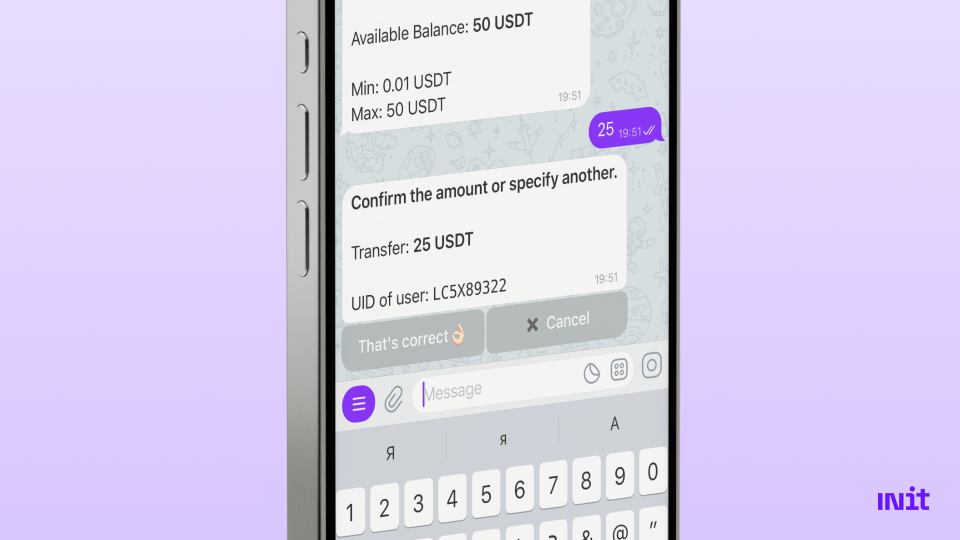
Messaging platforms introduced one of the most important shifts in crypto UX: interaction through conversation.
Instead of navigating multiple screens, users could trigger actions through simple commands or flows embedded in chat. This reduced the need for structured navigation and replaced it with something more natural.
The reason this works is not purely technical. It is behavioral.
People already:
- communicate through chat daily
- trust messaging environments
- understand conversational flows intuitively
When financial actions are embedded into that environment, they feel less like “using a product” and more like continuing a conversation.
This is why chat is not just another interface.
It is the beginning of interface reduction.
Key shift introduced by chat:
- navigation → conversation
- menus → actions
- interface → context
Voice and AI: From Commands to Intent
If chat removes friction, voice removes even more.
With the rise of AI-powered systems, interaction is moving beyond typed commands into spoken intent. Instead of selecting options, users can describe what they want, and the system interprets it. This changes the nature of interaction entirely.
A traditional interface requires users to adapt to the system.
Voice allows the system to adapt to the user.
For example, instead of manually constructing a transaction, a user might say:
- send funds to a known contact
- convert part of their balance
- check whether a transaction is safe
The system processes not just the command, but the context — history, behavior, and intent. However, this introduces a new layer of responsibility.
Unlike clicking a button, voice commands feel informal. But the consequences remain formal — and irreversible. This means voice interfaces must be supported by strong confirmation layers and safeguards.
Without them, convenience becomes risk.
The Move Toward Invisible Systems
The most transformative shift, however, is not chat or voice. It is the gradual movement toward invisible interfaces.
An invisible system is one where the user does not actively interact with every step. Instead, they define rules, preferences, or intent — and the system executes actions in the background. This model is already emerging.
Recurring payments are automated.
Risk checks happen silently.
Funds are routed without manual selection.
The user intervenes only when necessary.
This fundamentally changes the role of the interface. It is no longer the primary environment where actions happen. Instead, it becomes a control layer — something users return to when they need visibility or adjustments.
To better understand how these interface models compare, we can look at their characteristics side by side:
| Interface Type | How Users Interact | Strength | Limitation |
|---|---|---|---|
| Traditional UI | Click, navigate, configure | Full control | High complexity |
| Chat | Type commands or select actions | Natural, accessible | Limited depth |
| Voice | Speak intent | Fast, intuitive | Risk of misinterpretation |
| Invisible | Define rules, system executes | Maximum efficiency | Reduced visibility |
Each model solves a different problem. The future is not about choosing one — but combining them effectively.
Why Full Invisibility Is Not the End Goal
While the idea of fully invisible systems is appealing, it comes with trade-offs. In financial environments, complete invisibility can reduce user awareness. When actions happen automatically, users may lose track of:
- what is being executed
- when it happens
- why it happens
This creates a new type of risk — not technical, but cognitive. That is why the future is unlikely to be fully invisible. Instead, it will be selectively visible.
Users will see:
- critical actions
- important confirmations
- meaningful changes
Everything else will remain in the background. This balance is what defines the next generation of interfaces.
Where INit Fits Into This Evolution
This shift is already visible in how INit approaches product design.
Operating inside Telegram, INit naturally aligns with the movement toward chat-based interaction. Actions are simplified, flows are shorter, and the interface does not require deep navigation.
At the same time, the product avoids the risks of over-simplification by maintaining visibility where it matters.
Users can clearly see:
- transaction previews before execution
- fee structures
- confirmation steps
Behind the scenes, automation and infrastructure handle complexity — but the user is never fully disconnected from what is happening.
This reflects a broader principle:
The best interface is not the one you see the least. It is the one that shows exactly what you need, at the right moment.

The Direction Forward
The future of crypto interfaces will not be defined by a single format.
It will be a layered system where:
- chat provides accessibility
- voice enables natural interaction
- automation handles repetition
- visible layers ensure control
Instead of replacing interfaces, the industry is redefining them.
Crypto is moving from:
- screens → interactions
- actions → intent
- control → understanding
Final Thought
Interfaces are not disappearing.
They are evolving.
From complex dashboards to invisible systems, the goal remains the same: to make financial interaction feel natural, reliable, and effortless.
The real innovation is not removing the interface entirely.
It is designing systems where users no longer have to think about it.
And when that happens, crypto stops feeling like a product — and starts becoming part of everyday life.