Speed has become one of the most repeated promises in modern finance.
Instant transfers.
Fast settlement.
Real-time payments.
Money that moves in seconds.
For businesses, speed is valuable. No company wants to wait days for a payment to arrive or lose time because money is stuck between systems. But speed alone does not solve the full payment problem.
In many business cases, the bigger question is not simply: “How fast can money move?”
It is: “Can money move in the right way, through the right route, in the right currency, at the right moment?”
That is where payment flexibility becomes more important than speed.
As companies operate across borders, currencies, platforms, and customer segments, they need financial systems that can adapt. A payment that arrives quickly but creates accounting issues, conversion losses, compliance concerns, or operational friction is not truly efficient.
For modern businesses, the strongest payment infrastructure is not only fast. It is flexible.
Speed Solves One Problem. Flexibility Solves Many.
Payment speed matters most when a company needs immediate settlement. It improves cash flow, reduces waiting time, and helps businesses act faster.
But in real operations, payments are rarely one-dimensional. A company may need to receive funds from customers in one region, pay suppliers in another, settle contractors in stablecoins, convert part of its revenue into fiat, and keep another part available for future crypto transactions.
In that kind of environment, speed is only one part of the equation.
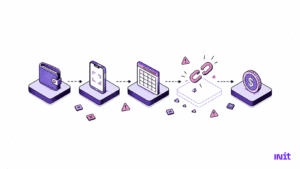
A fast payment system with limited routes can still create bottlenecks. If a business can receive funds only in one currency, through one provider, or into one account type, it remains dependent on a narrow financial path. When that path becomes expensive, unavailable, slow, or unsuitable, the business has little room to adapt.
Flexibility gives companies options. It allows them to choose how money enters, where it goes, and which format works best for each situation.
For growing businesses, this adaptability can be more valuable than shaving a few minutes off settlement time.
Why One Payment Route Is Rarely Enough
Many companies begin with a simple payment setup. One bank account, one payment processor, one currency, one flow. That may work at the beginning, especially for local businesses with a limited customer base.
But once a company becomes international, the structure becomes more complicated.
A business may have clients who prefer card payments, partners who request bank transfers, contractors who want stablecoins, and suppliers who operate in different currencies. Some payments may be urgent, while others require better documentation or lower fees. Some flows may involve small recurring transactions, while others may involve larger settlements that need more careful routing.
At that stage, relying on a single payment route becomes restrictive.
Businesses need systems that allow them to move between different payment options without rebuilding their financial operations from scratch. They need the ability to choose between fiat and crypto, stablecoins and bank transfers, direct payments and API-based flows.
This is especially important when companies work with international teams or customers. A payment method that works well in one country may be slow, expensive, or unavailable in another.
Payment flexibility reduces dependency on any one rail.
The Real Business Value of Multiple Currencies
Currency flexibility is another major part of the conversation. For individuals, currency choice is often a convenience. For businesses, it can affect margins, planning, and operational efficiency.
A company receiving revenue in one currency and paying expenses in another may constantly deal with conversion fees, timing issues, and exchange rate exposure. If every transaction requires conversion through a bank or payment provider, costs can accumulate quickly.
Crypto and stablecoins introduce a different model. Businesses can receive, hold, or send value in digital assets that fit their operational needs. Stablecoins, in particular, offer a practical middle ground: they provide the speed and accessibility of crypto infrastructure while reducing volatility compared to many other digital assets.
This does not mean businesses abandon fiat. In most cases, the future is hybrid. The strongest systems allow companies to use both traditional currencies and digital assets, depending on the context.
A business may keep accounting in euros, pay global contractors in USDT/USDC, receive crypto from international clients, and convert only when necessary. This kind of structure gives finance teams more control over timing, cost, and liquidity.
The value is not only in moving money faster. It is in choosing the best financial format for each use case.
Payment Flexibility in Practice
Different business scenarios require different payment priorities. Speed may matter in one case, while documentation, cost, or currency choice may matter more in another.
| Business Scenario | What the Business Needs Most | Why Flexibility Matters |
|---|---|---|
| Paying international contractors | Fast settlement and preferred currency | Contractors may work across regions and request different payment methods |
| Receiving client payments globally | Multiple payment options | Clients are more likely to complete payment when they can choose a familiar route |
| Managing supplier payments | Predictability and documentation | Businesses need records, references, and reliable execution |
| Handling treasury flows | Liquidity control | Companies may need to move funds between fiat, stablecoins, and crypto assets |
| Scaling across markets | Local adaptability | Payment infrastructure must work across countries, currencies, and regulations |
This table shows why “fast” is not always enough. Businesses need systems that can adjust to the payment context.
The Hidden Cost of Inflexible Payment Systems
Inflexibility often creates costs that are not immediately visible. A delayed international payment can interrupt supplier relationships. A lack of currency options can force unnecessary conversions. A limited payment route can make businesses dependent on one provider’s fees, limits, or availability. A system without API integration can force teams into manual work.
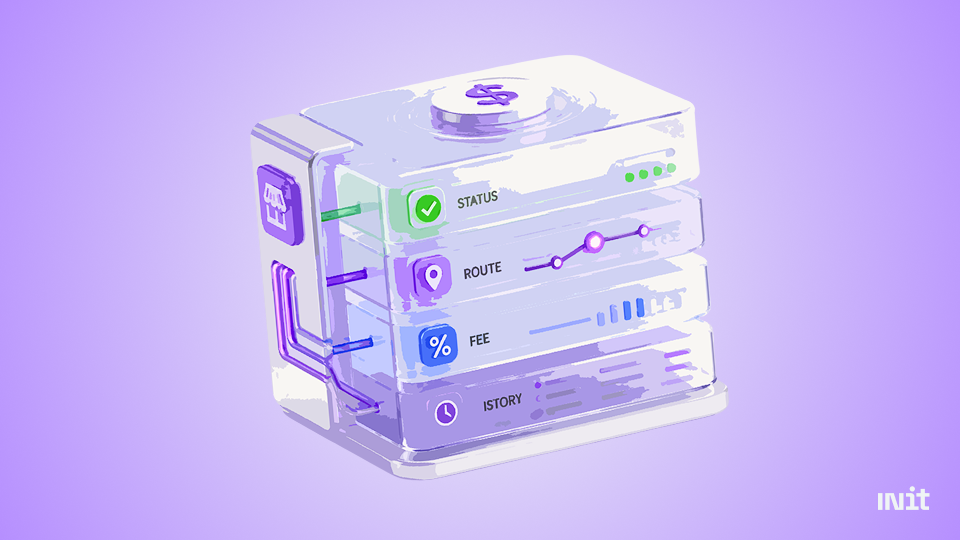
These costs do not always appear as transaction fees. They show up as operational drag. Finance teams spend time checking statuses, confirming payments, reconciling records, and solving issues that could have been avoided with better infrastructure. For growing companies, this becomes expensive.
A flexible system reduces these hidden costs by giving the business more control over its payment flows. It allows teams to choose the route that makes the most sense instead of forcing every transaction through the same process.
That is why flexibility becomes a strategic advantage.
Why API Access Matters for Businesses
For businesses, payment flexibility is not only about having more options in an interface. It is also about integration. A company does not want to manually repeat the same actions every day. If payments are part of operations, they need to integrate with internal systems, such as platforms, dashboards, accounting tools, customer flows, or checkout processes.
This is where APIs become essential.
A convenient API allows businesses to integrate crypto payments into their own workflows. Instead of treating crypto as a separate manual tool, companies can connect payment logic directly into their operations.
That can support use cases such as:
- automated payment creation,
- transaction status tracking,
- customer payment flows,
- contractor payouts,
- internal reporting,
- and business-specific financial routing.
The more operational a company becomes, the more important this integration layer is. Without an API, crypto may remain useful but separate. With an API, it becomes part of the business system.
Where INit Fits Into This Shift
This is where INit becomes relevant for businesses looking for more adaptable financial tools.
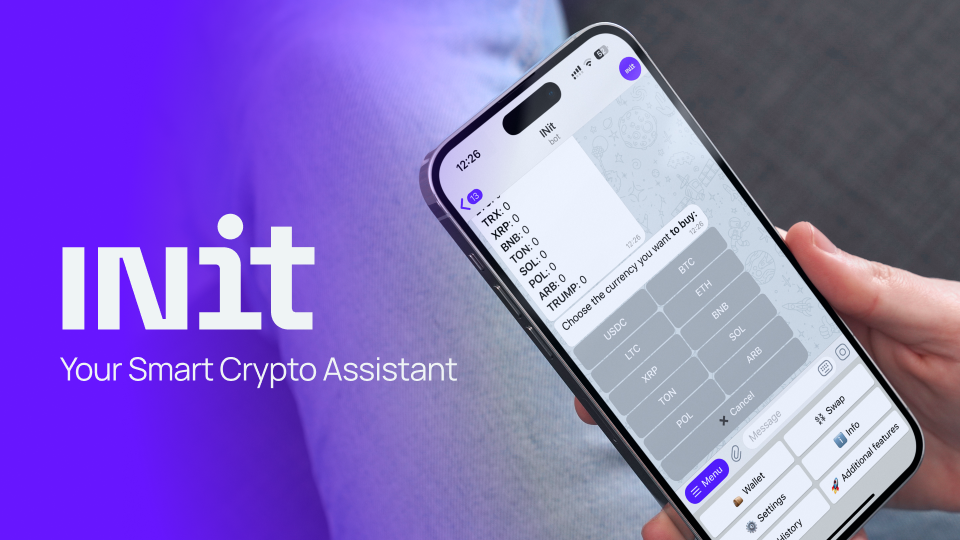
INit is built as a Telegram-native crypto solution, but its value for businesses goes beyond convenience. It supports the broader shift toward flexible payment infrastructure by giving companies access to crypto flows in a simple, familiar environment.
For business users, INit provides solutions that can help with practical financial operations: sending and receiving crypto, working with transparent transaction flows, accessing AML checks when needed, and managing payment activity with greater clarity.
A key part of this direction is INit’s business-oriented API. The API gives companies a more convenient way to integrate crypto functionality into their own systems, rather than relying only on manual actions inside the bot. This makes INit more suitable for businesses that need repeatable flows, structured payments, and smoother integration with internal operations.
The goal is not to replace every existing payment method. The goal is to give businesses another flexible route — one that can work alongside traditional finance and support international, digital-first operations.
For companies that need speed, multiple payment options, crypto access, and better operational control, this kind of flexibility matters.
The Future Is Hybrid, Not One-Route
The future of business payments will not be defined by one perfect payment method. It will be defined by systems that allow companies to combine different methods intelligently.
Some payments will still move through banks. Others will move through stablecoins. Some customers will prefer traditional options. Some partners will prefer crypto. Some flows will prioritize speed. Others will prioritize documentation, cost, or currency stability.
Businesses need infrastructure that can support all of this without adding unnecessary complexity. That is why payment flexibility is becoming a core requirement for modern financial operations.
Speed is important. But flexibility is what allows businesses to adapt.
Final Thought
Fast payments solve delays. Flexible payments solve operations.
For businesses, the real advantage is not simply moving money quickly. It is having the ability to choose the best route, currency, and method for each situation. As companies become more global, digital, and distributed, payment systems must become more adaptable.
The businesses that benefit most will be the ones that stop asking only how fast money can move — and start asking how intelligently it can move.