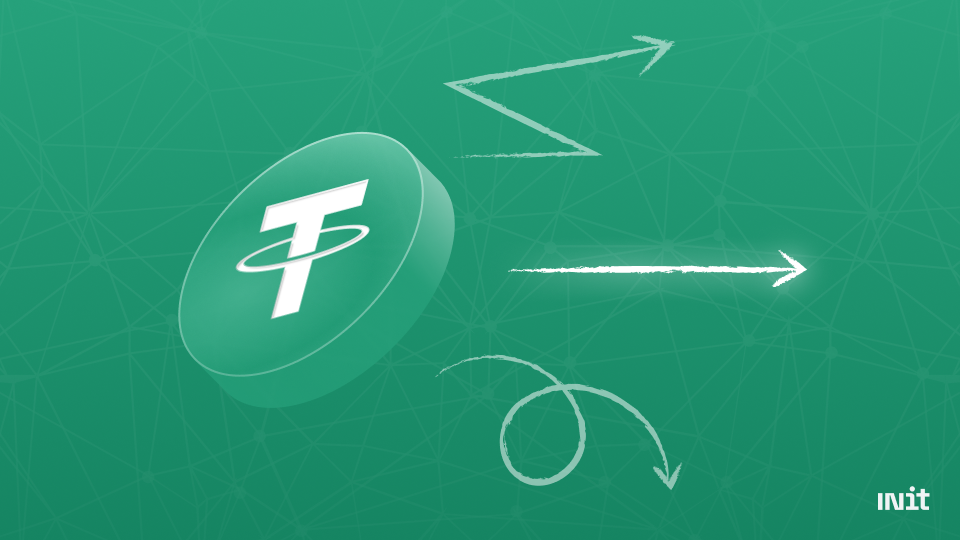
For many users, USDT looks like one asset.
A customer says they will send USDT.
A business says it accepts USDT.
A contractor asks to be paid in USDT.
The wording sounds simple. But in practice, one important detail is still missing:
Which network?
USDT can exist on different blockchains. It may be sent through Ethereum, TRON, TON, BNB Smart Chain, Solana, or another supported network. The asset name may be the same, but the payment experience can be very different.
For experienced crypto users, this is obvious.
For businesses, new users, and finance teams, it can become a hidden source of errors, costs, delays, and support issues.
The problem is not USDT itself.
The problem is assuming that “USDT” describes the full payment.
It does not.
One Asset, Many Payment Paths
In traditional finance, the currency and payment route are usually separate concepts. A company can send euros through SEPA, SWIFT, card rails, or another provider. The money may be denominated in the same currency, but the route affects timing, cost, and process.
Stablecoins work in a similar way.
USDT is the asset.
The blockchain network is the route.
That route determines much of the payment experience: how fast the transaction may settle, which wallet format is used, what fee applies, which platforms support the transfer, and what happens if a user selects the wrong option.
This is why accepting USDT is not the same as accepting every possible USDT payment.
A business needs to define which networks it supports, which addresses are valid, and what users should select before sending funds.
Without that clarity, a simple payment can turn into an operational issue.
Why Network Choice Matters
Different networks create different conditions for the same stablecoin.
Some networks are known for lower transaction fees. Others are widely supported by exchanges or wallets. Some may be preferred for speed, ecosystem access, liquidity, or compatibility with a particular product.
A user may choose a network because it is cheaper.
A business may prefer another because it is easier to reconcile.
A platform may support only selected networks.
A finance team may need consistency across payment records.
These differences matter more at business scale. One mistaken network choice can delay a payment. Repeated network confusion can create support tickets, failed deposits, reconciliation problems, and customer frustration.
The issue is not only technical. It becomes operational.
The Wrong Network Is a Real Payment Risk
One of the most common crypto mistakes is sending an asset through a network that the recipient does not support. The user may think they sent the correct asset because the token name is right. But if the network is wrong, the receiving platform may not recognise the deposit automatically. In some cases, recovery may be difficult, delayed, expensive, or impossible depending on the provider and wallet setup.
For personal users, this can be stressful. For businesses, it can damage the payment experience.
Imagine a customer pays an invoice in USDT but uses a network the business does not support. The customer believes the payment was completed. The business does not see the funds in its expected flow. Support has to investigate, the transaction record becomes unclear, and the operational process stops.
That is why network selection should never be treated as a small technical detail. It is part of the payment instruction.
Fees, Speed, and Liquidity Are Not the Same Everywhere
Network choice also affects the economics of the transaction. A transfer may be cheap on one network and more expensive on another. Some networks may offer faster confirmation. Others may have deeper liquidity or better support across exchanges, wallets, and providers.
For businesses, the question is not simply: “Can we receive USDT?”
It is: “Can we receive USDT on the network that fits this payment flow?”
A small payout may prioritise low fees. A larger business transaction may prioritise network reliability, exchange support, or internal accounting consistency. A crypto-native company may need the asset on a specific chain because that is where its operations happen.
The same asset can serve different purposes depending on the route. That makes network logic part of financial decision-making.
What Businesses Need to Clarify
A business that accepts stablecoins should not leave network choice to guesswork. It should define the payment conditions clearly before funds move.
| Payment Detail | Why It Matters |
|---|---|
| Supported networks | Prevents users from sending funds through an unsupported route |
| Correct wallet address | Reduces address mismatch and wrong-destination risk |
| Expected fees | Helps users understand the cost before sending |
| Confirmation timing | Sets realistic expectations for payment status |
| Deposit instructions | Reduces support issues and failed payment flows |
| Transaction record | Helps finance teams reconcile the payment later |
| Counterparty checks | Adds context before larger or higher-risk transfers |
The goal is to remove ambiguity from the payment process.
A clear payment instruction should answer both questions: What asset? Which network?
Why This Matters for Multi-Currency and Multi-Network Businesses
The network problem becomes more important when businesses operate across several crypto assets, currencies, and counterparties. A company may receive USDT on one network, hold USDC on another, exchange assets through a third, and pay contractors using whichever network they prefer. Each additional rail increases flexibility, but also increases the chance of confusion if the workflow is manual.
This is why businesses need structure around multi-network payments. They need saved recipients, clear transaction previews, transparent fees, transaction history, and support when something does not match the expected flow.
Without structure, multi-network flexibility can turn into manual chaos. With structure, it becomes an advantage.
Where INit Fits Into This Shift
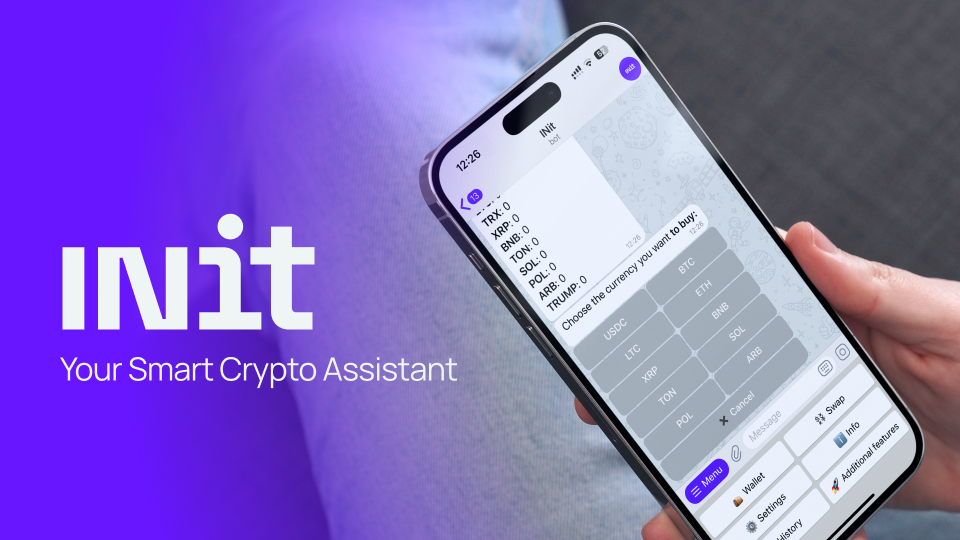
INit helps reduce the friction that comes with multi-network crypto payments by bringing more of the process into a guided Telegram-native environment.
Instead of asking users to manage every detail manually, INit supports clearer flows around sending, receiving, swapping, checking fees, reviewing history, and managing recipients.
The address book helps users save known destinations and reduce repeated copying. Transaction history makes past activity easier to review. Transparent fee information helps users understand costs before acting. AML checks add another layer of context when users need to evaluate an address or transaction.
Support also matters here. When network selection, status, or transaction context becomes unclear, users need a direct way to get help instead of searching across explorers, chats, and separate tools.
For businesses, API access can make these flows more structured by connecting crypto functionality with internal systems rather than relying only on manual actions.
INit does not make every network the same. It helps users manage network differences more clearly.
The Future of Stablecoin Payments Is Multi-Network
Stablecoin payments are not becoming simpler because there will be only one network. They are becoming more useful because users and businesses can choose different networks for different needs. That flexibility is valuable, but only when the product experience explains the choice well.
For mass adoption, stablecoin payments need less guessing:
- clearer network selection,
- better previews,
- saved recipients,
- fee transparency,
- understandable records,
- and support when something goes wrong.
The next stage of stablecoin UX is not only about faster transfers. It is about making multi-network payments understandable enough for normal users and reliable enough for businesses.
Final Thought
“USDT” is not a complete payment instruction. It is only the asset.
The network determines how that asset moves, how much the transfer may cost, how quickly it may arrive, and whether the recipient can process it correctly.
For businesses, this detail matters. As stablecoin payments become more common, companies will need to think not only about which assets they accept, but also which networks they support and how clearly they communicate that to users.
The hidden network problem is simple to ignore at low volume. At scale, it becomes one of the most important parts of crypto payment operations.