For many freelancers, getting paid is often more complicated than the work itself.
You finish a project, send the invoice, and then… wait.
Sometimes for days. Sometimes for a week. Sometimes longer.
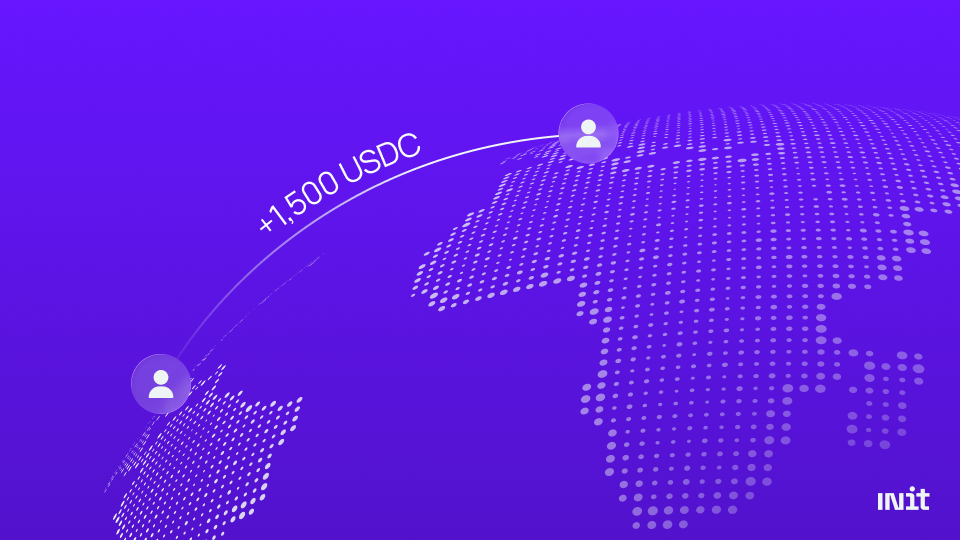
Between international transfers, conversion fees, intermediary banks, and unclear timelines, cross-border payments can feel slow, expensive, and unpredictable. But this is exactly where crypto — especially stablecoins — is quietly changing the experience. Not as a trend, but as a practical solution.
The Reality of Freelance Payments Today
Freelancers operate globally by default.
A designer in Europe works with a client in the US.
A developer in Asia builds for a startup in the UK.
A marketer in Latin America supports a team in the EU.
The work is borderless.
The payments are not.
Traditional systems introduce friction at almost every step:
- transfers take 2–5 business days
- fees are layered and often unclear
- currency conversion reduces the final amount
- banks may hold or review transactions
- payment status is not always transparent
For freelancers, this creates a constant uncertainty:
When will the money actually arrive — and how much will I receive?
Why Crypto Fits Freelance Workflows
Crypto payments align naturally with how freelancers already work.
They are:
- remote
- digital
- global
- flexible
Stablecoins, in particular, solve one of the biggest concerns — volatility — while keeping the benefits of crypto infrastructure.
Instead of waiting for bank transfers, freelancers can receive payments:
- in minutes instead of days
- with clear, upfront costs
- without intermediaries
- directly into their wallet
This changes not only the speed, but the predictability of getting paid.
Stablecoins: The Practical Layer
Stablecoins like USDT or USDC have become the backbone of freelance crypto payments.
They provide:
- price stability (pegged to fiat currencies)
- fast settlement
- global accessibility
- compatibility across platforms
For freelancers, this means:
You invoice in dollars.
You receive in stablecoins.
You keep or convert when needed.
No surprises. No exchange rate losses at the last moment.
A Simple Comparison: Traditional vs Crypto Payments
To understand the difference more clearly, it helps to look at how the two systems compare in practice:
| Factor | Traditional Bank Transfer | Crypto (Stablecoins) |
|---|---|---|
| Speed | 2–5 days | Minutes |
| Fees | Often hidden / layered | Transparent upfront |
| Currency Conversion | Required | Optional |
| Availability | Business hours | 24/7 |
| Transparency | Limited tracking | Visible on-chain |
| Accessibility | Bank-dependent | Global |
This is why many freelancers are not “switching” entirely — they are simply adding crypto as an option.
Where Simplicity Still Matters
Despite the benefits, crypto is not automatically easier.
For many freelancers, the challenges are:
- understanding wallets
- managing addresses
- tracking transactions
- calculating fees
- staying compliant
This is where product design becomes critical.
Freelancers don’t need more tools.
They need simpler ones.
Where INit Fits Into This Flow
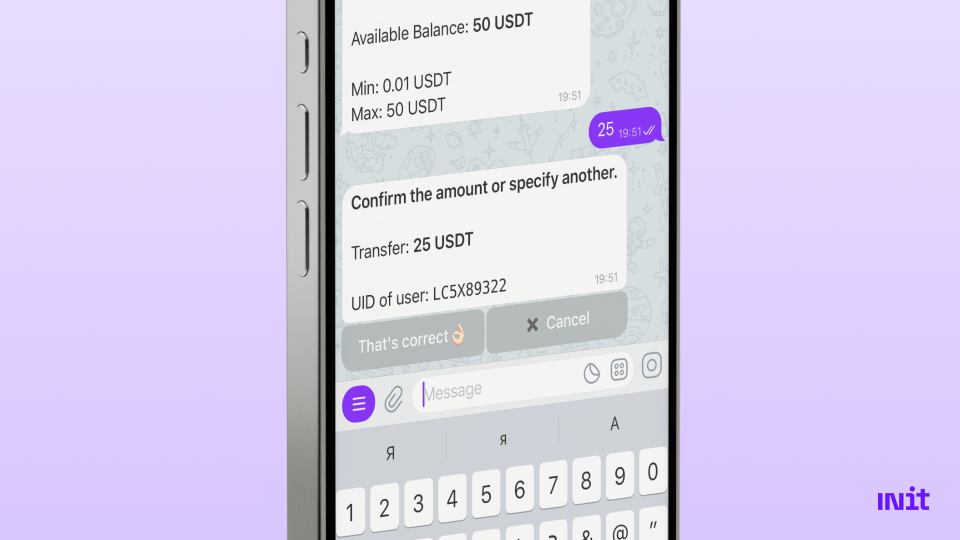
This is the direction behind INit. Instead of adding another platform to manage, INit brings crypto payments into a familiar environment — Telegram.
For freelancers, this means:
- sending and receiving funds directly in chat
- clear visibility of fees before confirming a transaction
- simple, structured flows without technical complexity
- access to transaction history and records
- built-in compliance tools when needed
The goal is not to make crypto “advanced,” but to make it usable in everyday work scenarios.
You don’t need to think about infrastructure.
You just complete the payment.
The Quiet Shift in Freelance Finance
Freelancers are not making loud announcements about switching to crypto.
They are simply choosing what works better.
A client asks for a faster method.
A payment arrives in minutes instead of days.
A fee becomes predictable instead of uncertain.
And the next time, the choice becomes easier. This is how adoption actually happens — not through hype, but through experience.
Final Thought
Freelancing has already gone global. Payments are catching up.
Crypto — especially stablecoins — is not replacing traditional systems overnight. But it is offering something freelancers have been missing for years: speed, clarity, and control.
And once getting paid becomes simple, everything else starts to feel easier too.