Crypto transactions used to be judged mainly by two things: speed and completion.
Did the payment go through?
Did the funds arrive?
For early users, that was often enough. Crypto was still technical, wallets were less polished, and many people accepted uncertainty as part of the experience. But as crypto moves into everyday payments, business flows, Telegram bots, stablecoins, and cross-border operations, users expect more than a final confirmation.
They want to understand what is happening before, during, and after the transaction.
This is where transaction visibility becomes essential.
Visibility is not only about security. It is about clarity, confidence, and control. It helps users see the transaction status, understand the fee, follow the route, and access the history later. In a financial environment where transactions can move quickly and cannot always be reversed, knowing what is happening at each step becomes part of the product value.
A transaction that works is good.
A transaction that users can understand is better.
From Confirmation to Context
For many years, crypto products treated the final confirmation as the main user outcome. Once the transaction was completed, the interface had done its job.
That logic no longer fits how people use crypto today.
A modern transaction is not just a technical event. It is part of a larger financial workflow. A user may need to know which network was used, what fee was paid, how long the transfer took, whether the amount changed during execution, or where to find the record later.
For businesses, this context matters even more. A completed payment still needs to be reconciled, reported, checked, and sometimes explained to another team, partner, or client.
This is why transaction visibility is becoming a product requirement rather than an optional detail. Users do not want to decode the process themselves. They want the interface to show the relevant information clearly.
Why Status Visibility Reduces Uncertainty
One of the most frustrating moments in any financial product is the gap between action and result.
A user sends money, but the final status is not yet clear. The transaction may be processing, waiting for confirmation, delayed by routing, or already completed but not reflected in the interface.
Without status visibility, this gap creates anxiety.
Users start asking:
Is it stuck?
Did I do something wrong?
Should I send it again?
Who can confirm what happened?
A clear status system prevents confusion. It shows whether the transaction is created, pending, processing, completed, failed, or requires action. This does not only make the product feel more transparent; it reduces unnecessary support requests and helps users make better decisions.
In crypto, where users often manage funds directly, visibility into status is not a small UX improvement. It is the difference between waiting calmly and guessing blindly.
Fees Should Be Seen Before They Are Felt
Fees are one of the main reasons transaction visibility matters.
A user may accept paying a fee if it is clear, expected, and explained before the transaction. What creates frustration is not always the fee itself, but discovering it too late or not understanding where the final amount changed.
In crypto, fees can appear in different forms: network fees, service fees, conversion costs, liquidity impact, or routing-related differences. If the product hides these details behind a simplified final number, users may complete the transaction but still feel uncertain about the outcome.
Good transaction visibility makes the cost structure understandable before the user confirms the action.
This is especially important for repeat users and businesses. They need predictable costs, not vague estimates. When fees are visible, users can compare options, plan better, and avoid surprises.
Transparency turns fees from a source of suspicion into a normal part of the transaction decision.
Route Visibility Turns a Black Box Into a Process
When users send money through traditional financial systems, the route is often invisible. Most people do not know how many intermediaries are involved, which systems process the payment, or why delays happen.
Crypto gives products a chance to do better.
A transaction may move through a network, a liquidity route, an exchange flow, or a specific payment path. For most users, the technical details do not need to be overwhelming. But the product should still show enough context to answer the basic question: how is this transaction being executed?
Route visibility helps users understand why a transaction may take longer, why the final amount may differ, or why one option is better than another. It also makes the experience feel more controlled, because the user sees that the transaction is following a defined process rather than disappearing into an invisible system.
This matters even more when multiple routes are possible. A business may care about cost, speed, currency, documentation, or reliability. Without visibility, the route is just hidden infrastructure. With visibility, it becomes part of the decision.
Transaction History Is Not Just a Record
Transaction history is often treated as a basic archive. But for real users and businesses, history is much more than a list of past actions.
It is proof.
It is memory.
It is a way to understand financial behavior over time.
A clear transaction history helps users track what they sent, received, converted, paid, or checked. It also supports reporting, reconciliation, customer communication, and internal finance processes.
For businesses, this is especially important. A transaction that cannot be easily found later creates extra work. Someone has to search through wallets, screenshots, emails, blockchain explorers, or support chats to reconstruct what happened.
Good transaction history turns crypto activity into usable financial information.
It helps answer simple but important questions:
When did the transaction happen?
What was the amount?
What fee was paid?
What was the final status?
Which counterparty was involved?
Where can the proof be found?
This is where visibility becomes operational infrastructure.
What Users Actually Need to See
The goal of visibility is not to overload users with technical data. A product does not become better by showing every possible detail.
Good visibility means showing the right information at the right moment.
| Transaction Layer | What Users Need to See | Why It Matters |
|---|---|---|
| Status | Pending, processing, completed, failed, or action required | Reduces uncertainty and prevents duplicate actions |
| Fees | Network cost, service fee, conversion impact, final amount | Helps users understand the real cost before confirming |
| Route | Payment path, selected currency, network, or execution method | Makes the transaction feel controlled rather than hidden |
| Timing | Estimated and actual completion time | Sets expectations and improves planning |
| History | Past transactions, amounts, statuses, references | Supports records, reporting, and future checks |
| Proof | Transaction ID, receipt, exportable details | Helps with reconciliation, support, and business documentation |
The value of transaction visibility is not in complexity. It is in making financial actions easier to understand.
Why Visibility Builds Product Confidence
Users trust products that explain what is happening.
This does not mean every interface needs to be full of technical labels. In fact, the best financial products often feel simple because they organize complexity well.
Visibility creates confidence by reducing the number of unknowns. When users see the status, fee, route, and history, they are less dependent on assumptions. They do not need to contact support for every unclear moment. They can understand the process themselves.
This is especially important in crypto, where users are often more aware of transaction risk, fee changes, and execution outcomes. A clean interface is valuable, but a clean interface without visibility can feel empty.
The strongest products combine simplicity with context.
They do not make users study the system.
They show users what matters.
Where INit Fits Into This Shift
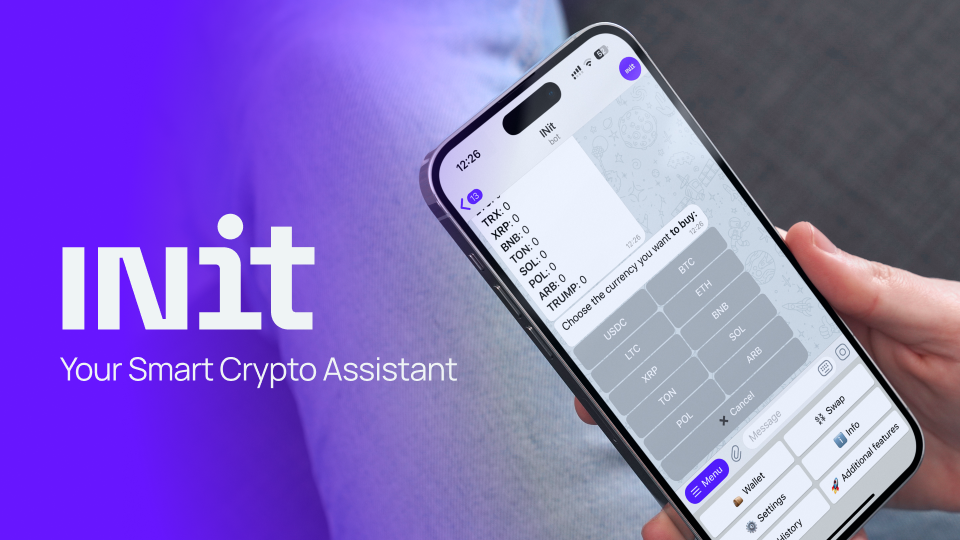
INit is built around the idea that crypto tools should be simple to use without making the transaction process feel unclear.
Inside a Telegram-native environment, users need actions to feel familiar, fast, and easy to follow. That means the product experience should not stop at “send” or “done.” It should help users understand the flow around the transaction.
For INit, transaction visibility connects directly with features such as transparent fee information, clear transaction processes, AML checks, accessible support, and structured records. These elements help users and businesses work with crypto in a more predictable way.
For individual users, visibility makes transactions easier to trust.
For businesses, it supports operational clarity: records, statuses, costs, and transaction context are easier to manage.
As crypto becomes part of everyday payments and business workflows, this kind of clarity becomes more important. Users do not want to feel like they are sending money into a black box. They want to see what is happening and understand the result.
The Future of Crypto UX Is Not Just Faster
Crypto products often compete on speed. But speed without visibility can create a strange experience: the transaction moves quickly, while the user still feels unsure about what happened.
The next stage of crypto UX will not be defined only by faster settlement or fewer clicks. It will be defined by interfaces that make financial actions more understandable.
Users will expect to see the cost before confirming, the status while waiting, the route when relevant, and the record after completion.
For businesses, this will become even more important. As crypto payments become part of finance operations, visibility will support reconciliation, reporting, support, and decision-making.
The best transaction is not only the one that finishes quickly. It is the one that leaves no confusion behind.
Final Thought
Transaction visibility matters because users no longer want to simply trust that the process is working somewhere in the background.
They want to see enough to feel informed.
Status shows progress.
Fees explain cost.
Routes show execution.
History creates memory.
Together, these layers turn a transaction from a black box into a clear financial action.
And as crypto becomes more practical, more business-oriented, and more embedded into everyday tools, visibility will become one of the most important parts of the user experience.