Crypto products have become dramatically faster over the past few years.
Transactions settle in seconds.
Swaps happen instantly.
Interfaces are cleaner than ever.
Automation handles more and more processes in the background.
But despite all this progress, one problem remains surprisingly human: sometimes users simply need help.
A transaction gets delayed.
A withdrawal stays “processing.”
A payment arrives on-chain, but the balance has not updated yet.
A user does not understand whether something is wrong — or simply still happening.
And in those moments, speed and automation alone are not enough. What users want most is clarity.
The Problem With “Fully Automated” Thinking
Many crypto products were built around a powerful idea: remove human involvement wherever possible.
Automation reduces costs, increases speed, and scales efficiently. From a technical perspective, this makes perfect sense. But financial products are different from most digital tools.
When real money is involved, uncertainty creates emotional pressure very quickly. Even small delays can feel alarming when users do not understand what is happening behind the scenes.
A five-minute delay on social media feels irrelevant.
A five-minute delay involving funds feels completely different.
This is why customer support remains one of the most underestimated parts of crypto infrastructure.
Support Is Not Only About Solving Problems
Traditionally, support has been treated as a reactive system: something users contact after something goes wrong. But in modern financial products, support plays a much broader role.
Good support:
- reduces anxiety,
- explains system behavior,
- builds trust,
- guides users through unfamiliar flows,
- and helps users feel confident using the product again.
In many cases, the quality of support defines whether a user stays with a platform long-term. A fast product may attract users. A trustworthy support experience keeps them.
Why Crypto Creates More Support Pressure
Crypto environments create unique support challenges because many actions are:
- irreversible,
- time-sensitive,
- technically unfamiliar,
- and dependent on blockchain conditions.
Unlike traditional apps, users cannot always rely on intuition.
For example:
- Is the transaction delayed or failed?
- Is the issue related to the network or the platform?
- Is the balance updating correctly?
- Was the wrong network selected?
- Are funds still processing on-chain?
These situations often require more explanation than technical intervention. That is why communication quality matters as much as technical capability.
The Hidden Cost of Poor Support
Many crypto platforms underestimate how expensive poor support becomes over time.
When users cannot get answers:
- trust erodes,
- support tickets escalate publicly,
- businesses hesitate to integrate,
- and users become afraid to move larger amounts.
The result is operational friction. Ironically, products built to feel “fast” begin creating hesitation because users are unsure what will happen if something goes wrong.
This is especially important as crypto moves into:
- business payments,
- treasury management,
- freelancer settlements,
- and operational financial workflows.
The more serious the use case becomes, the more valuable reliable support becomes.
What Users Actually Want From Support
Most users are not expecting perfect systems.
What they want is:
- visibility,
- responsiveness,
- and reassurance.
They want to know:
- what is happening,
- why it is happening,
- and what happens next.
This is why strong support systems focus not only on resolution speed but also on communication quality. Below is a simplified comparison between reactive and trust-oriented support models:
| Reactive Support | Trust-Oriented Support |
|---|---|
| Answers after escalation | Proactive explanations |
| Technical-only responses | Human communication |
| Slow status visibility | Clear transaction states |
| Generic responses | Context-aware guidance |
| Focus on ticket closure | Focus on user confidence |
The difference is subtle, but extremely important.
Why Human Support Still Matters
AI systems and automation will continue improving. They already help categorize requests, detect anomalies, and automate common workflows. But financial stress remains deeply human.
When users feel uncertain about money, they often want:
- confirmation from another person,
- contextual explanation,
- and reassurance that someone understands the situation.
This is especially true during:
- delayed transactions,
- verification issues,
- high-value transfers,
- compliance reviews.
In these moments, human interaction becomes part of the product experience itself. Not because automation failed — but because trust requires communication.
The Future: Hybrid Support Systems
The future of crypto support is unlikely to be fully human or fully automated. Instead, the strongest systems will combine both:
- automation for speed,
- AI for categorization and routing,
- human support for context and trust.
This hybrid approach allows products to remain efficient while still feeling dependable. Users do not necessarily need constant conversation. But they need to know that real help exists when it matters.
Where INit Fits Into This Approach
This philosophy is reflected in how INit approaches customer support.
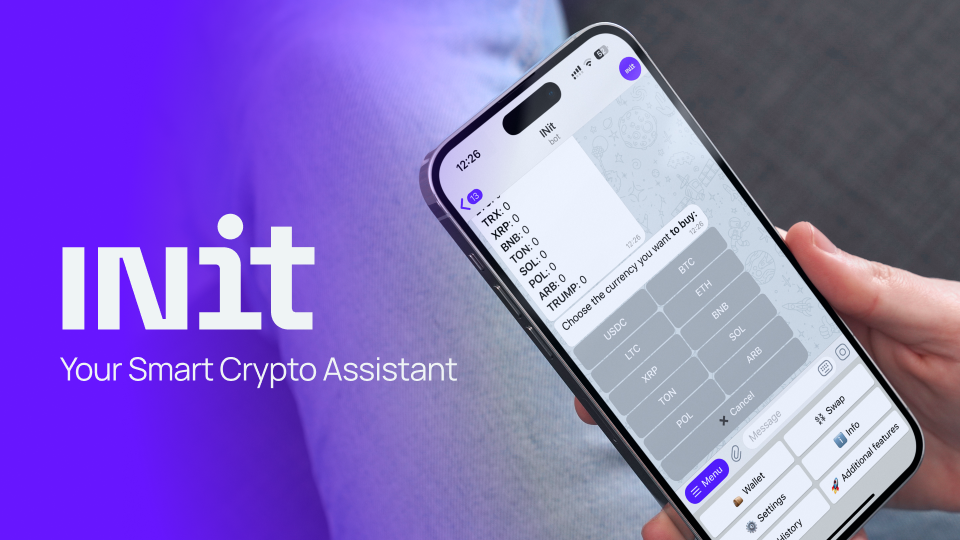
Alongside automated systems and structured transaction flows, INit provides 24/7 human support, allowing users to receive real assistance when questions or uncertainties appear.
This is especially important in situations involving:
- transaction statuses,
- verification flows,
- payment confirmations,
- or operational questions.
Rather than treating support as a secondary feature, INit treats it as part of the product’s overall trust layer. Because in financial systems, clarity matters just as much as speed.
Support as a Competitive Advantage
As crypto products become more technically similar, support quality may become one of the strongest differentiators in the market.
Users increasingly expect:
- transparent communication,
- predictable systems,
- and accessible help.
This shift is especially visible among:
- businesses,
- freelancers,
- operational users,
- and newer crypto participants.
The future of crypto is not only about faster infrastructure. It is also about making users feel supported while using it.
Final Thought
Crypto products spent years optimizing transactions. The next stage is optimizing confidence. And confidence is built through communication, visibility, and support — especially when money is moving across systems that users cannot fully see.
Because when something feels uncertain, users rarely remember how fast the product was. They remember whether someone helped them understand what was happening.