Traditionally, treasury management focused on preserving capital, maintaining liquidity, and ensuring a company could meet its financial obligations.
For decades, this relied on bank accounts, short-term deposits, and traditional financial instruments. But modern businesses operate differently. Teams are distributed globally, suppliers work across jurisdictions, and payments move between multiple currencies every day.
As operations become increasingly international, treasury management is no longer just about holding funds — it is about moving them efficiently.
Why Stablecoins Are Entering Treasury Strategies
Stablecoins are becoming attractive because they combine the stability of fiat-pegged assets with the flexibility of blockchain infrastructure. For treasury teams, this means the ability to move capital quickly, maintain liquidity across borders, and reduce dependence on settlement windows or banking hours.
The appeal is not speculation.
It is operational efficiency.
Companies are beginning to view stablecoins as a complementary treasury tool that can help manage reserves, support international payments, and improve access to working capital when needed.
From Banking Rails to Global Liquidity Networks
Traditional treasury operations are built around banking networks. Moving funds internationally often involves multiple intermediaries, currency conversions, and settlement delays. Crypto introduces an alternative layer of financial infrastructure where value can move globally through a single network.
Most businesses are not replacing banks. Instead, they are building hybrid treasury models that combine traditional accounts with digital assets and stablecoin liquidity.
| Traditional Treasury Model | Hybrid Treasury Model |
|---|---|
| Bank accounts only | Bank accounts + stablecoins |
| Limited by banking hours | 24/7 accessibility |
| Multiple intermediaries | Direct global transfers |
| Localized liquidity | Global liquidity access |
| Slower settlement | Faster capital movement |
Treasury as a Strategic Function
As businesses scale internationally, treasury is becoming more strategic. The key questions are no longer only about preserving capital. Companies increasingly focus on:
- liquidity flexibility,
- capital mobility,
- cross-border efficiency,
- and operational resilience.
Crypto enters the conversation because it helps address these challenges.
Rather than acting as a replacement for traditional finance, it expands the set of tools treasury teams can use to support growth.
Where INit Fits Into This Evolution
As businesses explore crypto-enabled treasury operations, simplicity becomes increasingly important.
This is where INit fits into the broader trend.
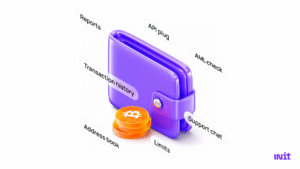
Through a familiar Telegram-based environment, INit provides access to tools that support real operational use cases, including flexible payment flows, AML checks, transparent transaction processes, and accessible support.
For companies looking to explore digital financial infrastructure without adding unnecessary complexity, these tools can help bridge the gap between traditional treasury operations and emerging crypto workflows.
Final Thought
Treasury management is evolving from cash preservation to liquidity optimization. As businesses become more international, access to flexible, global, and always-available financial infrastructure becomes increasingly valuable.
That is why crypto is gradually finding a place in treasury operations — not as a speculative asset, but as a practical tool for moving and managing capital in a global economy.